octubre 25, 2026 — No Comments

YSL Bags Fan Page Sophisticated Carry

Suede vs Leather at The Row: Where the Extra Money Actually Goes

Fifteen hundred and twenty dollars. The observed 2026 gap stretches from the India 10.00 in leather at $3,850 to the identical bag in suede at $5,370 — the very same silhouette, the same dimensions, the same hardware, and one material swap. The same spread recurs from model to model, which indicates a costing decision rather than a short-lived oddity. For anyone comparing the row bags at the upper end, it is the biggest variable unrelated to size and the one rarely spelled out. An honest answer reduces to hide yield, finishing labour, durability and the way each material performs years later on the secondary market. What follows weighs calfskin and suede against each other on all four, working from observed market prices rather than an official list, because the brand publishes none.

The Premium, Measured

Begin with the evidence, since the suede surcharge is repeatable enough to be measured. On the observed 2026 line-up, three pairings give the same silhouette in both materials, and the dollar spread hardly shifts across the India family. The Agnes 15 does not follow suit, with a tighter gap in both dollar and percentage terms, so the premium is not a fixed rule. The same model is available in a canvas blend at $4,300 as well, seven hundred dollars below the leather version of itself, and that completes the ladder from canvas up through calfskin to suede. Remember that the number in each model name is only the bag's width in inches, so these are genuinely like-for-like comparisons rather than size steps in disguise. Stock and stockist both shift prices, so the table is best read as one moment in the market rather than a standing list.

Model Leather, observed 2026 Suede, as observed in 2026 Suede premium
India 10.00 $3,850 $5,370 +$1,520, around 39%
India 12.00 $3,890 $5,450 +$1,560, around 40%
Agnes 15 $5,000 $5,800 +$800, about 16%

Why Calfskin designer shoulder bags Earns Its Place

Structurally, calfskin is what holds the catalogue together, and it is the reason so many of these bags stand up when empty. It takes a defined shape and holds it, which matters for a house that signs its products by outline rather than a logo. A range of finishes is available on it as well, so one hide type spans very different objects. Stated as one hundred percent calfskin in a matte grained finish and lined in cotton herringbone, the Soft Margaux 10 sits alongside the Margaux Shoulder 12, which pairs calfskin with a full lambskin lining. Real calfskin at this level manages to be substantial and soft together, swallowing light rather than reflecting it, which is a reliable way to read a row bag in person. In practice it is the more forgiving of the two materials, since it can be buffed, lightly conditioned and, within limits, professionally repaired.

The Calfskin Finishes You Will Find in the Line

Calfskin in the line does not all behave the same way, and the finish alters both the look and the maintenance burden. These variations recur across families instead of belonging to any one model, so learning them once repays the effort. Smooth calfskin shows marks soonest and reads as the most formal. Matte grained calfskin, the choice on the Soft Margaux family, hides wear better and does the heavy lifting in the collection. Saddle calfskin runs heavier and more structured, and it is what gives the compact top-handle shapes their rigidity. Polished calfskin sits at the dressiest end, with a surface that catches light in a way the matte finishes carefully avoid. The list below spells out what each finish expects of an owner.

  • Smooth calfskin — the most refined, and the least tolerant of scuffs and rings
  • Matte grained calfskin — the sensible daily choice, since it hides light wear
  • Saddle calfskin — structural and firm, holds shape hardest
  • Polished calfskin — the dressiest surface, and the quickest to show handling marks
  • Lambskin and nappa — mostly used as lining, exceptionally soft and easily marked

Suede, and What It Does

Suede is a different proposition completely, chosen for feel and depth of colour rather than for durability. What it adds to the same silhouette is a softer edge and a matte density beyond calfskin, which explains its use on relaxed and structured shapes alike. Colour on genuine suede here is consistent across the panel with no plastic sheen at all, and that evenness is one of the tells to look for in person. It reaches across the Margaux family alongside grained calfskin, saddle calfskin, canvas and nylon, and it carries several pieces beyond the current catalogue too. A suede Backpack 9 has been observed at $3,900 through a retailer; the archive Bindle, meanwhile, was a suede bag with raw-cut trims and a knotted detail, reported at roughly $1,190 originally. Also in suede, the Bindle Three has been observed around $1,700 on the secondary market with its single padded handle and removable inner zipped pouch.

What Justifies the Premium

Four things explain the surcharge, and none of them is branding. The inner surface of the hide is where suede is produced, so usable area per skin falls and rejection rates rise for panels large enough to cut a bag from. Every panel has to match in colour, and since suede shows inconsistency far more brutally than a grained surface, the matching costs more. The nap direction has to run correctly across seams, which adds cutting constraints that a smooth leather pattern never faces. Finally, suede is harder to correct in production, since a mark that would buff out of calfskin is permanent on it. Comparing the Agnes 15 gap of $800 with the India family's $1,520 to $1,560 suggests the premium tracks material consumption per pattern rather than a uniform brand-wide uplift.

Living With Every Material

No brand-issued care protocol exists for these bags, so what follows is material-appropriate general guidance rather than an official instruction set. The basics are the same for every row bag regardless of material: no overfilling, no direct sunlight, heat or rain, and storage in its dust bag lightly stuffed so it holds shape. After that the two diverge sharply, and nothing ruins an expensive purchase faster than treating suede like calfskin. Calfskin answers to a soft dry cloth and, now and then, a neutral conditioner used sparingly. Suede responds to almost nothing except a suede brush, and stains generally need professional attention. The ordered steps below set out the sequence worth following when either material picks up a mark.

  1. Stop, and identify which material you are dealing with before touching the mark with anything
  2. On calfskin, buff gently with a soft dry cloth first and reassess
  3. Apply neutral conditioner to calfskin sparingly and infrequently, never as a routine
  4. For suede, use only a suede brush, and always move with the nap
  5. Never apply leather cream, wet wipes, soap or water-based cleaner to suede
  6. Take any real suede stain to a professional rather than experimenting

What Resale Does With the Premium

The secondary market does not repay the suede premium evenly, and that is worth knowing before you pay it. In the Rebag CLAIR 2025 report The Row posted 97% brand-level value retention and entered the top tier for the first time, behind only Telfar, Hermes and Goyard. The strongest individual figures sit in structured leather pieces: the N/S Park Tote at 146%, the Margaux Tote at 107% and the Half Moon shoulder at 106%. Appreciation is bunched in black and neutral calfskin in the signature silhouettes instead of spreading across the catalogue, and canvas, nylon, sisal and seasonal-colour pieces are observed discounting. None of this is investment advice, and none of it means suede is a mistake. The point is that the suede premium is worth paying for the object itself, because resale is unlikely to hand back it.

How to Choose Between Them

It is an easier decision once the framing of better versus worse is abandoned. Go calfskin if constant wear, unpredictable weather, or a defined shape held for a decade is what you are asking of it. Suede makes sense if you already own the structured piece and want that silhouette with a different hand, or if the colour depth is the entire point. If you are assembling a first serious collection of row handbags, a structured leather signature shape is usually the better first purchase, with suede following on. If both versions of a model are in front of you and you cannot decide, the tie-breaker is your climate and your storage rather than your taste. That is the least glamorous conclusion in the row fashion conversation, and the one owners reach on their own after the first rainy afternoon.

octubre 25, 2026 — No Comments

Best Bottega Fits to Buy Real Wear Review

Bottega Desires Garments: Putting Together a Capsule Wardrobe

A minimalist closet rotation lives or dies on the quality of each single item, and this is precisely the point where the conversation around Bottega Desires clothes gets interesting. The idea is simple: fewer garments, repeated wear, and every piece pulling double or triple duty across a week. Still, before assembling anything, it's worth tackling the question a great many shoppers are currently searching for: what is Bottega Desires, and how does it slot into a wardrobe designed to hold up past one season? This article breaks down the practical side — shirts, shorts, hoodies, jortsand how they combine into a rotation without redundant purchases or wasted space.

Bottega Desires positions itself as a streetwear-leaning brand with a focus on tailored essentials rather than a full runway catalogue. That distinction matters for capsule building, because a capsule has no use for twenty statement garments — the goal is eight to twelve garments that mix and match across a minimum of four to six weeks without repeating an identical outfit. Its main categories — tops, shorts, hoodies, and jorts — map fairly cleanly onto that structure, which is one reason it keeps coming up in minimalist-closet and capsule-wardrobe conversations heading into 2026.

What Is Bottega Desires, Exactly?

Bottega Desires operates as a clothing line rooted in everyday, wearable essentials instead of seasonal style statements. It leans into uncluttered cuts, low-key labelling, and a limited but considered colour palette — an approach that feels "quiet" rather than "loud," which is precisely what a capsule wardrobe rewards. In contrast to fast-fashion releases chasing trend cycles every six weeks, the drop schedule tends to move more slowly, which fits shoppers who want to purchase once and rewear repeatedly rather than keep buying and throwing pieces away.

Within public discourse, the naming overlap with Bottega Veneta is no accident, and it deserves a direct answer rather than being sidestepped. Bottega Desires is in no way Bottega Veneta, and the two are separate entities with separate design houses, separate pricing structures, and separate production standards. Most people who search "bottega desires vs bottega veneta" are simply trying to determine whether they've landed on the luxury house or the streetwear-adjacent label — they bottega desires pullover are not the same thing, and treating them as interchangeable will lead to confused expectations on both sides.

Bottega Desires Compared to Bottega Veneta: Getting the Expectations Right

Since this pairing keeps resurfacing, a straight answer — not a hedge — is called for. Bottega Veneta stands as an Italian luxury house with decades of leather-goods pedigree, intrecciato weaving, and price points that sit in the four-figure-and-up range for the majority of ready-to-wear and accessories. Bottega Desires operates in a completely different tier — it's a label built around everyday wear organised around shirts, shorts, hoodies, and jorts rather than fine leatherwork or catwalk lines. If you're building a capsule wardrobe on a realistic budget, the two brands are solving different problems: one leans toward aspirational luxury while the other delivers everyday, rotation-ready basics.

The mix-up makes sense considering how alike the names sound, and a number of customers find themselves browsing Bottega Desires despite intending to search for Bottega Veneta Desires-branded goods or archive pieces. However, with the separation made clear, deciding becomes far less complicated: capsule wardrobes are about repeatable, durable basics you're not afraid to wear five days in a row, and that's precisely the space Bottega Desires clothing occupies.

Point of comparison Bottega Desires Bottega Veneta
Category focus Shirts, shorts, hoodies, jorts Leather items, ready-to-wear pieces, and accessories
Brand positioning Relaxed, casual essentials A luxury house from Italy
Where it fits in a capsule Daily go-to staples Sparingly-worn investment item
Drop frequency A slower pace with fewer seasonal releases Formal, season-based collections
What most buyers are after Build a wearable, repeatable wardrobe A lasting, high-end investment

The Shirt Piece: The Foundation Garment of Your Capsule

Any capsule wardrobe requires a central anchor piece, and the bottega desires shirt tends to fill that role for a lot of buyers. With minimal effort, a well-fitted neutral-toned shirt can transition from a laid-back day look to something a touch more polished — change the footwear, layer something on top, and the whole outfit's tone shifts. That flexibility is the entire point of capsule dressing: one item doing the work of several, leaving no redundancy in your closet.

The biggest factors in a shirt built for frequent wear are how heavy the fabric is and how consistent the cut stays. If the fabric is too light, the shirt won't keep its structure across a full day, and inconsistent sizing across the line will throw off the rest of the pieces you've coordinated with it. If you're reading a bottega desires review before buying, pay closest attention to how reviewers describe fit consistency and fabric hand-feel — those two factors reveal far more about a piece's capsule-readiness than colour or branding ever could.

Jorts and Shorts: Warm-Weather Rotation Staples

Bottoms make or break a summer-ready capsule comes together, which is precisely the space where bottega desires shorts and bottega desires jorts step in and earn their place. On the lighter, more athletic-leaning end of a rotation, shorts do the heavy lifting — think errands, travel days, anything where you want ease of movement without sacrificing a put-together look. On cooler evenings or during transitional seasons, jorts are the more fitting option because of the denim build that gives them extra structure and a heavier hang.

The practical rule for a capsule wardrobe is to keep no more than two to three bottoms per season, each in a colour that pairs with the rest of the pieces in rotation.
Given tops that skew neutral — white, black, muted earth tones — your shorts and jorts ought to mirror the same logic rather than introducing a shade useful with only one top.
Rather than restriction, think of it as multiplication: a leaner collection yield greater outfit variety, and less decision fatigue every morning.

Our take on the Hoodie: Layering Without Bulk

The moment the weather shift, a capsule wardrobe without a reliable layering piece comes undone — and it's more often than not the bottega desires hoodie covering the shortfall. Three things determine whether a hoodie earns a spot in the lineup: sitting over a shirt without bulking up the silhouette, holding its own as a whole outfit when you want minimal effort, and surviving repeated washing without losing shape. That third point is underrated — a hoodie that pills or stretches out after eight washes isn't a capsule piece, it's a liability you'll be replacing every few months.

Perhaps more than anywhere else in a wardrobe, cut makes the biggest difference in this case. When a hoodie is tailored too loose, it works against the fitted shirts and shorts within a compact capsule; on the other hand, one that's too slim restricts how useful it is for layering during chillier months. The sweet spot — a softly eased fit that still maintains a structured shoulder line — is what most capsule-driven shoppers say they lean toward when weighing choices within the line.

Digging into a Bottega Desires Rundown Prior to You Buy

Written reviews are the place where expectation collides with real-world wear, and anyone genuinely invested in capsule building should comb through a handful of before investing in a complete lineup of Bottega Desires clothes. Zero in on comments on how sizing holds up across different product types — does the shirt run true to size the same way the hoodie does, or does one require sizing up while the other calls for sizing down? Such a small but crucial detail can spare you a return cycle and a week of wardrobe disruption.

As a second point, closely observe the way the fabric holds up after multiple washes, since a wardrobe essential needs to survive more than twenty wears without visible degradation. Thirdly, weigh the per-wear cost instead of relying on sticker price alone — a shirt worn sixty times in a year at a moderate price point beats a cheaper shirt worn six times before it loses shape. No matter the label, that identical logic applies to every minimalist-closet choice, and it serves as the filter separating truly practical staples from wardrobe excess.

A Practical Framework for Assembling the Outfit Cycle

Start with three shirts, a pair of jorts, one hoodie, and two pairs of shorts — this amounts to a seven-piece foundation that can yield well over a dozen distinct outfits through combination alone. Bring in a additional hoodie only if your local weather truly requires heavier layering for several months a year; otherwise, that spend is put to better use on a second pair of shorts or a slightly dressier shirt. The goal is combinatorial efficiency, not accumulation.

Keep tabs on the per-wear cost over a full season if you want solid evidence on whether the capsule approach is paying off. Split the cost of each garment by the number of times you really put it on, and you'll quickly see which garments are earning their closet space and which ones were an unplanned purchase. Because the figures make the inefficiency too glaring to dismiss, the majority who commit to this exercise for a single season quit impulse purchases after that. Whether you land on Bottega Desires pieces or another basics-focused line, this approach — fewer pieces, higher rotation, honest tracking — is what actually builds a capsule wardrobe that lasts into 2026 and beyond.

octubre 25, 2026 — No Comments

Watch Rise Of The Titan King Episodes Free For Short Drama Fans

This Is Two Problems, Not a Single One

It looks like a lone question, getting a vertical episode onto a television, but it is really two. The first is simply whether an app is published for the screen you actually own, and for most brands in 2026 it does not. Geometry is the second, since the episodes are Rise of the Titan King shot 9:16 for a phone held upright and the panel in your room is 16:9. Settling problem one has no effect on the second, and many guides quietly skip past that. The rest of this piece is what is officially supported, what no listing supports, and where the gap between them leaves you. I will state it flatly where no official option exists instead of inventing a workaround, since the workarounds here are exactly how people end up installing something they should not.

The One Screen With a Real App Is Apple TV

My Drama, the vertical streaming outfit from the Kyiv studio Holywater, is where the exception lives. iPhone, iPad, Apple TV on tvOS 18 or later, and Apple Vision Pro all appear on its App Store listing. Treat that tvOS 18 requirement as real, not a formality, since the app may simply not be offered to an older Apple TV box. My Drama took a Webby Award for Best Streaming Service in 2025, and Fox Entertainment bought an equity stake that October, which is the sort of backing that pays for platform work. Full access costs about $19.99 a week in the US App Store as of September 2026, and prices vary from country to country and change. This is, for now, the shortest path if your only goal is short dramas on a real television with an official app.

The Missing ReelShort TV App

Readers search for "reelshort tv" and "reel short tv" day in and day out, and the thing being searched for does not appear to exist. iOS, iPadOS, Mac computers with Apple silicon and visionOS are what ReelShort's App Store listing covers, and it lists no Apple TV version whatsoever. A ReelShort app for smart televisions, Roku or Apple TV remains unverified, and no official listing for one turned up. As of September 2026 no ReelShort living-room app is there to install, and that is flat, not a hedge. the Mac app on Apple silicon and the website in a desktop browser are the nearest official stand-ins, each reaching a big display through a cable. So anything advertised as a ReelShort television app is not what it claims, and that counts for more than the inconvenience.

Site by Site: The Browser Route

The three big sites behave very differently, while a browser stays the most flexible big-screen route. reelshort.com is the most complete of the three: it allows sign-in with Google, Facebook, Apple, TikTok or email and syncs viewing progress across devices, so a laptop on the television carries on from where your phone left off. There is a catch printed on its own series pages: free unlocks happen in the app, so ads and check-in rewards remain on your phone. ShortMax takes you sideways: shortmax.com redirects to shorttv.live, which does offer web browsing of dramas. dramabox.com mainly points visitors toward the app rather than playing much for you, making DramaBox the most app-first of the three. So if the plan is to watch short dramas online on something bigger than a phone, the browser is the route that actually works today, with ReelShort's site the strongest of the set.

Casting and Mirroring: Untested, Not Endorsed

This is the point where I have to be blunt about the limits of what is documented. Silence does not count as a feature: no official listing or support page I checked states that these apps support AirPlay, Chromecast or any other casting protocol. Screen mirroring is a system-level trick rather than an app feature, and streaming apps in other categories routinely block it, so treat it as untested, not supported. What does not depend on anyone's goodwill is a physical cable from a laptop or an Apple silicon Mac to an HDMI input, since the television then sees a plain video signal. There is no cable trick left on a Roku stick, since it has no HDMI input. If casting works on your app and television, enjoy it, but no one has promised it will survive the next update.

A Tall Show on a Wide Screen Gives Up Most of the Panel

Now the geometry, which no app can fix. Fitting the height is all a 9:16 video can do on a 16:9 panel, which leaves two black columns wider, together, than the picture itself. On a 65-inch television, by my own reckoning, the image occupies a strip roughly 18 inches wide and 32 inches tall, for a diagonal of about 37 inches and a bit under a third of the panel area. Put another way, a 65-inch set shows a picture smaller than a 40-inch widescreen one. Because these shows frame faces dead center, zooming in to fill the width crops the top and bottom of every shot and strips out the performance. The framing is deliberate, which is why the format works at arm's length and looks stranded across a living room. Odd to write and still true: a propped-up tablet is often better than a television.

Fake TV Apps and Sideloaded Builds

The gap fills with junk because the demand is real and the supply is not. Any address with misspellings or unofficial suffixes is a pirated site, which repeats ReelShort's own guidance. At least one DramaBox look-alike domain openly describes its download as an unofficial modified version of the app, which should not go near your account. An Android app called ReelBox has no connection to ReelShort, and GoldShort TV is a small unrelated Android TV app, not a GoodShort product, so names make trouble of their own. Several unrelated apps use "short tv" in their names as well, which collides with ShortTV, the brand behind shorttv.live. Sideloading a phone APK to an Android television box is not an official route either, with no store receipt, no refund path and no way to verify what you installed.

Screen by Screen in 2026

The table lays out each screen, what is officially supported, what is not, and what that leaves you doing. Built from the official listings as checked in September 2026, it cannot promise more, and platform support changes without announcements. Where a cell says nothing official was found, that means exactly that and no more. I have not plugged a gap with a rumor or a third-party claim.

The device or screen Officially supported Not supported at all The practical result
Apple TV on tvOS 18 or later The My Drama app No ReelShort version on its listing The one real living-room app; older boxes miss out
Apple Vision Pro headset visionOS is listed by My Drama and ReelShort Not a screen a room can share A huge virtual display for one viewer
Mac on Apple silicon The ReelShort app My Drama's listing shows no Mac version Official ReelShort route to a big display, via cable
Samsung or LG smart TV No official app turned up No TV app from ReelShort, DramaBox, ShortMax or DramaWave was found Fall back on an HDMI input and a laptop
Roku hardware No official app turned up Any ReelShort Roku channel is unverified No route at all, and no HDMI input to fall back on
An Android TV or Google TV box No official app found Sideloaded phone APKs are not an official route Skip it instead of sideloading
Laptop or desktop browser reelshort.com with synced login and shorttv.live web browsing Free unlocks stay in the app; dramabox.com pushes to the app The most reliable big-screen path, over a cable

The second column alone makes the shape of the market plain. One app aside, the television has been left to the browser. Presumably that will change, but it has not changed yet.

The Setup I Would Actually Use

If you own an Apple TV on tvOS 18 or later, install My Drama and stop reading; that is the finished answer. Put a laptop on the HDMI input for everything else, open reelshort.com or shorttv.live, and sign in with the same account as your phone so progress follows you. Do the free unlocking on the phone first, where the ads and check-ins live, then move to the big screen. Expect the picture to sit in a tall strip in the middle and accept it, since cropping to fill the width costs you the faces. Pay no attention to anything promising a television build of an app whose maker has not published one. Short dramas on a big screen in 2026 are a compromise you can set up in five minutes, rather than a product anyone has properly built yet.

octubre 25, 2026 — No Comments

Best Marc Jacobs Iconic Bags to Buy Honest Review Inside

The band everyone argues about

A band of brands sits between mall fashion and the European leather houses, called contemporary by retailers and accessible designer by shoppers. Designer-level branding, department-store distribution, a large outlet business, https://marcjacob.org/ and bags priced in the low hundreds rather than the low thousands: those are the rules of a perfectly real commercial category. The query "marc jacobs vs coach" exists because buyers, store floorplans and search behavior all file Marc Jacobs, Coach and Michael Kors in the same group. Which brand is better made is rarely the argument, because at this level construction gaps are narrower than branding suggests. Usually it is about status, and status is the hardest thing to measure honestly. Verified material covers one of the three here, and care is taken with the other two.

In its own words: where Marc Jacobs puts itself

Product data published by the brand itself, not analyst commentary, is the most useful evidence, and it classifies its handbags as contemporary rather than luxury. No editorial ranking settles as much of the debate as that single tag, because a house that considered itself a luxury maison would not file its bags that way. Marketing carries the same positioning: the brand publishes a Jacobs line reading "No more Birkins, only Tote Bags", framed explicitly as a repudiation of exclusivity and elitism. Asked "is marc jacobs luxury", the correct answer is that the company does not claim to be, and prices accordingly. Designer authorship at a price a student or a first-job buyer can manage is what it does claim, which is a different promise and easier to keep. One piece of history belongs here: Marc by Marc Jacobs operated from 2001 until it was discontinued in 2015, and the house has had no formal lower tier since.

Price entry points, and why only one column carries numbers

All figures below are for Marc Jacobs, taken from marcjacobs.com in the US and checked on 29 September 2026; prices vary by country and currency and move without notice. Competitor pricing moves constantly across seasons, regions and promotions, and a figure quoted in an article goes stale faster than a reader can act on it, so no Coach or Michael Kors prices appear anywhere in this piece. Go to each brand's own site on the day you shop; it takes two minutes and is the only reliable method. On the Marc Jacobs side, the lowest-cost route into a marc jacobs bag is the canvas version of The Tote Bag at about $150 for the Crossbody size, $178 small, $198 medium and $228 large. In leather the same silhouette runs to roughly $398, $498 and $598 by size, the Shoulder Bags category spanned from about $198 to $698 that day, and The Snapshot sat at about $325 to $328. The clearest single indicator of where a marc jacobs price actually lands is that spread: entry near $150 and a ceiling under $800 across most categories.

Materials, and what a shopper can check without a lab

A brand's best bag against a rival's cheapest is how comparisons go wrong. Because Marc Jacobs publishes its specifications, the substance is checkable: the canvas totes are cotton canvas, the Leather Medium Tote is full-grain leather, and The Snapshot uses Saffiano leather with a faille lining and a dust bag included. More telling still is what the brand says about wear. Its own documentation states that canvas "is known for its unique characteristics and can develop a vintage, worn-in appearance over time", that this aging is intentional and not a manufacturing defect, that buyers should not get the canvas wet because it can stain, and that no cleaning agents are recommended on its fabrics. The leather language is equally blunt, noting that leather is durable but not completely resistant to scratches and scuffs. The buyer data is consistent with this: on Zappos, an authorized retailer, the Canvas Medium Tote held 4.3 out of 5 from 32 reviews and The Snapshot 4.8 from 40, the commonest tote complaint being logo lettering peeling. With the other two brands, read their own care and warranty pages the same way, because that is where a company is most honest about what its materials will do.

Distribution, outlets and the fine print that actually costs money

More about tier is told by distribution than by any advertisement. The Marc Jacobs store locator showed 103 locations on 29 September 2026, and the split is the story: 46 boutiques and 57 outlets, so more than half the physical network is off-price. A single boutique covers Europe, on Regent Street in London; the rest of the continent is served by outlets. What matters more than the count is the fine print: merchandise bought at any Marc Jacobs outlet is final sale and cannot be returned or exchanged, and the brand states that final sale items cannot be repaired or replaced, which places outlet purchases outside the one-year warranty. Things work differently for full-price online orders: 30 days to return from shipment, a free prepaid UPS label, free ground shipping over $50, and no exchanges at all on any order. Look up each rival brand's outlet count and read its outlet return policy before assuming an outlet bag carries the same protection as a boutique one.

What this comparison is not able to settle

First on the list of things this article cannot settle is resale. Reliable resale-value data for Marc Jacobs did not turn up in the research behind this article: the brand does not appear in the value-retention rankings published by the major resale platforms, and at least one authentication service does not list it at all. This article makes no claim about whether a Marc Jacobs bag holds its value, in either direction, because absence of coverage is not a measured depreciation figure. The second is any head-to-head on revenue, unit sales or build quality against Coach or Michael Kors, because no verified figures for those companies were to be had and inventing them would be worse than silence. Customer service is the third; the brand's own direct-to-consumer site carries a low third-party review score, but such scores are complaint-weighted and cannot be compared with rivals without equivalent data. One further piece of context belongs here: ownership changed on 1 September 2026, when WHP Global and G-III Apparel Group completed their acquisition, so pricing and distribution strategy could shift from here.

How to carry out the comparison yourself

Comparing like with like, on the same afternoon, is the workable method. Choose one silhouette you would genuinely carry, in a single material, and price it across all three brands on their own sites, not on aggregators. The four things that actually differ come next: the material named in the specification, the warranty term and what voids it, the return window and whether exchanges exist, and whether the item is boutique stock or outlet stock. Plenty of shoppers reach these brands by typing the singular "marc jacob", and that spelling can steer you toward unauthorized sellers, where none of the above applies and no warranty exists. Stay with the brand's own site, its boutiques or named authorized retailers such as Saks Fifth Avenue, Neiman Marcus, Bloomingdale's, Nordstrom, Dillard's or Farfetch, keep the receipt, and remember that Marc Jacobs predicates its warranty on proof of purchase from an authorized vendor. One closing piece of context, and its date is deliberate: back in April 2018 the analyst Luca Solca told Glossy that Marc Jacobs "missed a great opportunity to be a relevant accessible brand, in the same vein as Michael Kors", a judgment made years before The Tote Bag became the brand's best seller, and worth reading as history, not a current verdict.

Comparison dimension Verified for Marc Jacobs (29 September 2026) What to check yourself for the others
Self-declared tier Product data classifies handbags as contemporary, not luxury Each brand's own category and press language, in its own words
Entry price Canvas Tote Bag from about $150; leather sizes about $398 to $598 Today's price for one comparable bag on each brand's own site
Category ceiling Shoulder Bags about $198 to $698; Totes about $278 to $798 The dearest bag each brand sells in the same category
Materials Cotton canvas, full-grain leather, and Saffiano on The Snapshot The material named in each product specification, not the campaign
Distribution 103 locations, divided 46 boutiques and 57 outlets Each store locator's boutique-to-outlet ratio
Outlet terms Final sale, no returns or exchanges, outside the one-year warranty Whether outlet stock carries the same warranty and return rights
Returns online 30 days from shipment, a free UPS label, no exchanges at all Return window, who pays shipping, and exchanges offered or not
Resale value No reliable data found; no claim made here Live sold listings on a reputable platform, rather than brand marketing

octubre 25, 2026 — No Comments

Coach Accessories Explained Materials and Craft

The Complete Guide to Coach in 2026

In 2026, Coach, one of the best-known American fashion names, is reporting robust sales growth. What started as a modest leather workshop became a handbag specialist, and the brand now sells apparel, footwear and accessories through stores worldwide. The guiding idea behind the brand has barely changed for decades: well-crafted leather goods at prices below those of the traditional European luxury houses. That space has been defined by a federal court as accessible luxury, different from mass-market fashion and also from true luxury.

In this guide you will discover the story of how Coach started, who is behind it today, the scale the business has reached and what goes into its range. It also covers how a full-price coach store is different from a coach outlet, a point that trips up plenty of shoppers. Each figure is dated to its source, and any prices are observed market prices rather than an official price list.

How a Manhattan Workshop Became an American Fashion Name

The story of Coach begins in 1941, when a small family-run leather workshop opened its doors in Manhattan. In Coach's own history, six artisans worked in a loft on 34th Street, making men's wallets, billfolds and other small leather goods. Handbags and even the Coach name arrived later, the name dating to about 1960 or 1961. In spite of some incorrect accounts, Miles and Lillian Cahn were not the first owners of the workshop.

The Cahns came into the business in 1946, and by around 1950 Miles was running the factory. In 1961 the Cahns bought out the original owners and took over. The proposal to begin adding women's handbags reportedly came from Lillian Cahn, and this step reshaped the company. Miles Cahn is credited with creating glovetanned leather, a finish modeled on the way a worn baseball glove grows softer with use.

The Bonnie Cashin Era

Bonnie Cashin, Coach's first lead designer, is the designer most closely linked with the early years of Coach. She is reported to have worked under contract rather than as an employee, and she was never a co-founder. Her exact start date is a small puzzle, since Coach's own pages list both 1961 and 1962. What is clear is that she worked with Coach coach clothes until 1974.

According to Coach, the toggle on the top of her convertible inspired the brass turnlock closure she unveiled in 1964. She is also credited with side pockets, coin-purse details and brighter colors that loosened up the brand's look. The turnlock is to this day one of the most distinctive Coach details, and it appears on bags such as the Cassie crossbody.

Owners, Listings and the Birth of Tapestry

In July 1985, Coach passed to Sara Lee Corporation. Coach's stock market listing took place in October 2000, and Sara Lee is reported to have fully exited the following year. In 2001 Coach introduced its Signature collection with the "C" monogram, so the pattern is a recent addition, not a mid-century heritage motif. The corporation, Coach, Inc., was renamed Tapestry, Inc. on 31 October 2017, and its stock symbol moved from COH to TPR.

The change of name was limited to the parent company; the Coach brand, its stores and its products were not renamed. Tapestry sold Stuart Weitzman to Caleres in a deal that closed on 4 August 2025, ending a chapter that started when Coach, Inc. acquired the shoe label in 2015. In 2026 Tapestry owns only two brands, Coach and Kate Spade, and Coach is by far the larger of the two.

The Failed Capri Acquisition

Capri Holdings, which owns Michael Kors, Versace and Jimmy Choo, became the subject of a takeover agreement announced by Tapestry on 10 August 2023. Opposition to the deal came from the Federal Trade Commission in April 2024, when it asked a federal court to halt the transaction with a preliminary injunction. A federal judge in the Southern District of New York handed down that preliminary injunction on 24 October 2024. The ruling did not decide the merits, though it kept the companies from closing the deal while the challenge went on.

In its decision, the court recognized that an accessible luxury handbag market exists, distinct from both mass-market bags and true luxury. Tapestry and Capri ended their agreement on 14 November 2024, saying the legal process was unlikely to conclude before their February 2025 deadline. The acquisition was never completed, so Tapestry owns no Michael Kors, Versace or Jimmy Choo business.

Who Steers Coach Today

The parent company, Tapestry, is headed by chief executive Joanne Crevoiserat. The brand itself is run by Todd Kahn, Coach's CEO and brand president, who took over on an interim basis in July 2020 before being confirmed permanently in April 2021. The creative lead is Stuart Vevers, whose appointment was announced in June 2013.

Vevers remains Coach's creative director in 2026, after reportedly presenting his first Coach collection in February 2014. Before Coach, he is reported to have been creative director at Loewe following a stint at Mulberry. Archive designs have been reissued and vintage shapes recast into new bags such as the Tabby, as Coach has leaned on its archive under his direction. His Fall 2026 collection was shown on 11 February 2026 at the Cunard Building in New York.

Coach in Numbers

The best snapshot of Coach's overall scale comes from Tapestry's annual report for the fiscal year ending 27 June 2026. Tapestry as a whole recorded $8,004.2 million, including Coach's net sales of $6,914.7 million, 24% higher than the prior year. Coach, in effect, produced about 86% of group sales.

At the end of that fiscal year Coach had 973 directly operated stores, with 336 in North America and 637 internationally. A figure of about 1,299 stores is also quoted, but it counts every Tapestry store rather than Coach alone. Tapestry also reported that the average unit retail price of Coach handbags grew at a mid-teens percentage rate across the year. Management has attributed this gain partly to a pullback in promotions.

Indicator Result Reporting period
Coach brand net sales $6,914.7 million, a 24% rise The 2026 fiscal year
Tapestry group net sales $8,004.2 million Fiscal 2026
Coach directly operated stores 973 As of the end of fiscal 2026
Of these, North America 336 As of the end of fiscal 2026
Within that, international 637 Close of fiscal 2026
Brands in the Tapestry portfolio Coach and Kate Spade 2026

What Coach Sells: Bags, Clothing and Shoes

Structured icons are paired with soft, slouchy leather in coach handbags today, and handbags remain the heart of the business. The Tabby debuted in 2019 on a 1970s archive shape, the Rogue was introduced in 2016 and was relaunched in 2021, and the Brooklyn, a relaxed coach shoulder bag, arrived in August 2024. The Empire Carryall was presented on the Fall 2024 runway and released in February 2025. At the high end, a Rogue 25 in alligator was observed at $8,000, the highest bag price observed, while the Kisslock Frame Bag, said to have opened the Fall 2026 show, was observed at $350. Pieces from the Coach Originals line are not vintage: these are newly made reissues of archive designs.

Ready-to-wear is now a significant part of the range, and coach clothing for Fall 2026 included varsity jackets in leather and in leather with wool, the brand's first all-shearling varsity jacket, peacoats and suede coats. In the same show, the brand also presented blazers, flared trousers, A-line skirts, floor-length dresses with high collars and all-gender jacquard knits. On the footwear side, there are sneakers such as the Soho Sneaker and the laceless Skate Sneaker, and meanwhile fashion press noted loafers, clogs, booties and sandals for fall. Coach also runs Coach (Re)Loved, launched in 2021 and reported to cover trade-ins, restored bags and upcycled pieces, plus Coachtopia, a circular-design sub-brand launched on 20 April 2023.

Shopping for Coach: Coach Store, Coach Outlet and Online

The biggest flagships use the Coach House name, while any full-price coach store offers the current collections. The New York Coach House on Fifth Avenue is reported to have opened in 2016, whereas a new Coach House at 645 Fifth Avenue has been reported as targeted for 2027. Across the Atlantic in London, the Coach House on Regent Street opened in 2016 as well, while UK shoppers can also find the brand at Harrods, Selfridges and John Lewis. To see the latest season, the full-price range is the place to go, whether you are after a structured coach bag, a coach tote bag or a new jacket.

Both outlet stores and the official online outlet section on Coach's own website together make up Coach Outlet, Coach's own official channel. In 2014, Coach's head of investor relations was quoted saying around 85% of outlet merchandise was made for the outlet channel, though that figure is dated, and Tapestry has since spoken about bringing some full-price product into outlets. Claims that outlet bags are always worse, or exactly the same as boutique bags, go beyond the public evidence. Bicester Village, Cheshire Oaks and Ashford Designer Outlet are among the UK outlet store locations. Shoppers searching for the brand sometimes enter "couch" or "cosch"; in that case, check that any site promising huge discounts is really Coach's own website or a known retailer.

octubre 24, 2026 — No Comments

AI Undress Ratings Safety Join Free Today

How to Identify an AI Synthetic Fast

Most deepfakes can be flagged in minutes by merging visual checks alongside provenance and inverse search tools. Commence with context plus source reliability, next move to forensic cues like edges, lighting, and metadata.

The quick test is simple: validate where the picture or video came from, extract indexed stills, and search for contradictions within light, texture, alongside physics. If that post claims any intimate or explicit scenario made via a "friend" and "girlfriend," treat it as high threat and assume any AI-powered undress tool or online nude generator may be involved. These photos are often created by a Clothing Removal Tool or an Adult Artificial Intelligence Generator that fails with boundaries in places fabric used could be, fine aspects like jewelry, alongside shadows in intricate scenes. A fake does not require to be ideal to be damaging, so the goal is confidence via convergence: multiple minor tells plus tool-based verification.

What Makes Clothing Removal Deepfakes Different Compared to Classic Face Switches?

Undress deepfakes focus on the body plus clothing layers, not just the face region. They often come from "clothing removal" or "Deepnude-style" apps that simulate body under clothing, and this introduces unique distortions.

Classic face switches focus on merging a face into a target, therefore their weak areas cluster around facial borders, hairlines, plus lip-sync. Undress synthetic images from adult artificial intelligence tools such including N8ked, DrawNudes, UnclotheBaby, AINudez, Nudiva, plus PornGen try attempting to invent realistic unclothed textures under garments, and that is where physics plus detail crack: edges where straps plus seams were, absent fabric imprints, inconsistent tan lines, alongside misaligned reflections on skin versus accessories. Generators may produce a convincing torso but miss consistency across the entire scene, especially when hands, hair, plus clothing interact. As these apps get optimized for velocity and shock effect, they can seem real at first glance while collapsing under methodical inspection.

The 12 Professional Checks You Could Run in Moments

Run layered examinations: start with source and context, proceed to geometry plus light, then utilize free tools in order to validate. No individual test is absolute; confidence comes through multiple independent signals.

Begin with drawnudes provenance by checking user account age, post history, location statements, and whether that content is presented as "AI-powered," " generated," or "Generated." Next, extract stills alongside scrutinize boundaries: hair wisps against backdrops, edges where garments would touch flesh, halos around shoulders, and inconsistent blending near earrings and necklaces. Inspect anatomy and pose seeking improbable deformations, fake symmetry, or missing occlusions where digits should press into skin or clothing; undress app products struggle with believable pressure, fabric wrinkles, and believable transitions from covered into uncovered areas. Examine light and surfaces for mismatched lighting, duplicate specular gleams, and mirrors plus sunglasses that fail to echo that same scene; natural nude surfaces ought to inherit the same lighting rig from the room, and discrepancies are powerful signals. Review fine details: pores, fine hair, and noise patterns should vary naturally, but AI often repeats tiling or produces over-smooth, synthetic regions adjacent near detailed ones.

Check text plus logos in the frame for warped letters, inconsistent typography, or brand marks that bend unnaturally; deep generators frequently mangle typography. Regarding video, look toward boundary flicker surrounding the torso, respiratory motion and chest motion that do not match the rest of the body, and audio-lip alignment drift if vocalization is present; sequential review exposes errors missed in normal playback. Inspect encoding and noise coherence, since patchwork reconstruction can create patches of different compression quality or chromatic subsampling; error degree analysis can indicate at pasted areas. Review metadata alongside content credentials: intact EXIF, camera model, and edit history via Content Authentication Verify increase trust, while stripped information is neutral however invites further checks. Finally, run inverse image search in order to find earlier plus original posts, compare timestamps across sites, and see whether the "reveal" came from on a platform known for web-based nude generators plus AI girls; recycled or re-captioned media are a major tell.

Which Free Applications Actually Help?

Use a small toolkit you may run in any browser: reverse image search, frame capture, metadata reading, and basic forensic tools. Combine at no fewer than two tools for each hypothesis.

Google Lens, TinEye, and Yandex enable find originals. Video Analysis & WeVerify retrieves thumbnails, keyframes, and social context from videos. Forensically (29a.ch) and FotoForensics provide ELA, clone detection, and noise analysis to spot pasted patches. ExifTool plus web readers like Metadata2Go reveal device info and modifications, while Content Credentials Verify checks secure provenance when present. Amnesty's YouTube Analysis Tool assists with posting time and snapshot comparisons on media content.

Tool Type Best For Price Access Notes
InVID & WeVerify Browser plugin Keyframes, reverse search, social context Free Extension stores Great first pass on social video claims
Forensically (29a.ch) Web forensic suite ELA, clone, noise, error analysis Free Web app Multiple filters in one place
FotoForensics Web ELA Quick anomaly screening Free Web app Best when paired with other tools
ExifTool / Metadata2Go Metadata readers Camera, edits, timestamps Free CLI / Web Metadata absence is not proof of fakery
Google Lens / TinEye / Yandex Reverse image search Finding originals and prior posts Free Web / Mobile Key for spotting recycled assets
Content Credentials Verify Provenance verifier Cryptographic edit history (C2PA) Free Web Works when publishers embed credentials
Amnesty YouTube DataViewer Video thumbnails/time Upload time cross-check Free Web Useful for timeline verification

Use VLC and FFmpeg locally for extract frames when a platform restricts downloads, then process the images through the tools mentioned. Keep a clean copy of every suspicious media within your archive so repeated recompression will not erase obvious patterns. When results diverge, prioritize provenance and cross-posting timeline over single-filter anomalies.

Privacy, Consent, alongside Reporting Deepfake Misuse

Non-consensual deepfakes constitute harassment and might violate laws and platform rules. Maintain evidence, limit resharing, and use formal reporting channels quickly.

If you and someone you recognize is targeted through an AI nude app, document web addresses, usernames, timestamps, and screenshots, and preserve the original files securely. Report the content to the platform under fake profile or sexualized content policies; many services now explicitly prohibit Deepnude-style imagery plus AI-powered Clothing Undressing Tool outputs. Contact site administrators regarding removal, file the DMCA notice if copyrighted photos got used, and examine local legal choices regarding intimate image abuse. Ask search engines to delist the URLs if policies allow, plus consider a concise statement to your network warning regarding resharing while you pursue takedown. Revisit your privacy posture by locking down public photos, removing high-resolution uploads, and opting out from data brokers who feed online nude generator communities.

Limits, False Alarms, and Five Facts You Can Apply

Detection is likelihood-based, and compression, re-editing, or screenshots might mimic artifacts. Approach any single signal with caution alongside weigh the entire stack of evidence.

Heavy filters, cosmetic retouching, or dim shots can blur skin and destroy EXIF, while chat apps strip information by default; absence of metadata must trigger more examinations, not conclusions. Certain adult AI applications now add mild grain and animation to hide seams, so lean toward reflections, jewelry blocking, and cross-platform temporal verification. Models developed for realistic naked generation often focus to narrow figure types, which results to repeating moles, freckles, or surface tiles across separate photos from the same account. Multiple useful facts: Digital Credentials (C2PA) are appearing on primary publisher photos alongside, when present, provide cryptographic edit record; clone-detection heatmaps in Forensically reveal recurring patches that human eyes miss; backward image search frequently uncovers the covered original used via an undress application; JPEG re-saving can create false compression hotspots, so compare against known-clean photos; and mirrors or glossy surfaces remain stubborn truth-tellers because generators tend to forget to change reflections.

Keep the mental model simple: source first, physics afterward, pixels third. While a claim comes from a brand linked to AI girls or NSFW adult AI tools, or name-drops platforms like N8ked, Image Creator, UndressBaby, AINudez, Adult AI, or PornGen, escalate scrutiny and confirm across independent platforms. Treat shocking "reveals" with extra skepticism, especially if that uploader is recent, anonymous, or profiting from clicks. With single repeatable workflow alongside a few no-cost tools, you could reduce the harm and the spread of AI clothing removal deepfakes.

octubre 24, 2026 — No Comments

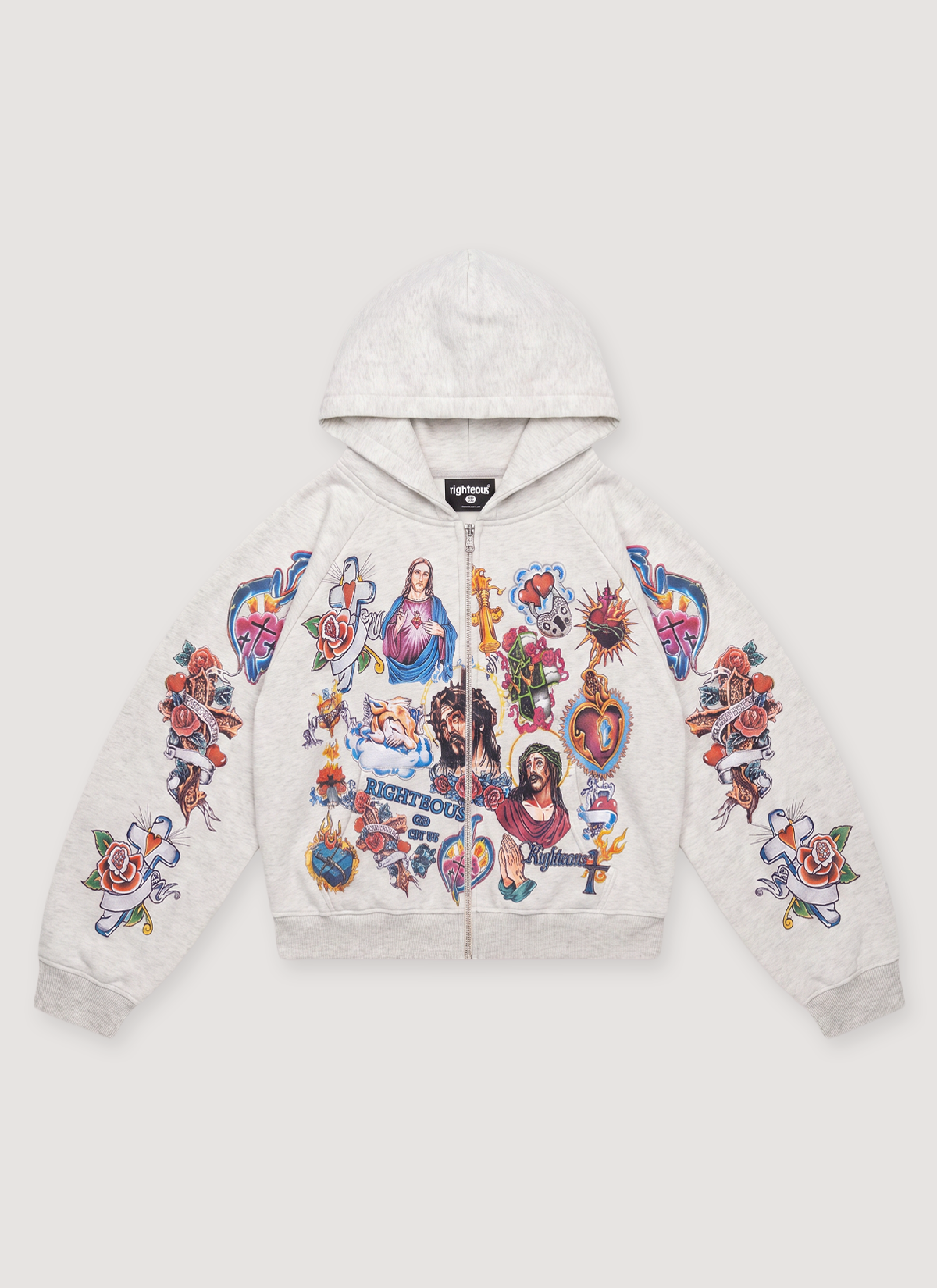
Righteous T Shirt Explained Everyday Styling Ideas

Ways to Layer Righteous Clothing for Chillier Weather

Colder months isn't an excuse to abandoning style, and it definitely doesn't mean reaching for the identical baggy coat you've thrown on for the last five winters running. Layering is a skill, and once you understand how the weight of the fabric, silhouette, and fit interact, you can construct looks that feel deliberate instead of thrown together. What follows is a walkthrough of practical layering strategies using Righteous apparel, with attention to what really holds in heat versus what just looks warm. If you've been searching for a deep-dive review before investing in a layered closet, think of this as a real-condition analysis of how the items function in everyday use, not just on a hanger.

Effective layering hinges on controlling warmth, not just stacking on material. A trio of thinner layers almost always work better than one thick layer because they trap pockets of air that your natural warmth warms up. This is simple physics, and it's why mountaineers and city commuters alike rely on the identical three-layer approach: a base layer, a mid layer, and an outer layer. We Are Righteous crafts pieces that fit neatly into each of these categories, which simplifies things to mix and match without guessing what goes with what.

The Base Layer Comes First

The base layer rests against your skin and serves one function: handling sweat. If this layer holds moisture in instead of drawing it away from your body, the rest of your layers lose their effectiveness, and you'll feel clammy and cold within about an hour outdoors. A properly fitted tee or long-sleeve from the Righteous clothing lineup works well here because a fit that's close without being restrictive minimizes the air gap between skin and fabric, which accelerates heat retention.

Cotton offers comfort, but it stays wet once it's wet, so if you're preparing for truly cold weather rather than mild autumn afternoons, be mindful of the weight of the garment and how the fabric is detailed on faith graphic tee the listing. A thicker jersey fabric will insulate better than a thin tee, even if both are the identical cut. This is where reading specifics matters more than trusting a photo.

How something fits also influences how the next layer sits on top. A base layer that's too loose will gather awkwardly under a mid layer, producing uneven pinch points and patchy heat retention. Aim for something close to the body through the torso and arms, with enough room to move without restriction. Six or seven degrees of temperature difference can dramatically shift which base layer weight makes sense, so don't assume one tee works for every chilly situation between September and January.

Add a Mid Layer for Insulation

Here is where the noble hoodie earns its place in the rotation. The hoodie acts as the heat-retaining layer, holding warm air near the body while still permitting enough airflow that you don't overheat the moment you step indoors. The hood component adds a functional bonus: wrapping the head and neck cuts down thermal loss considerably, since a disproportionate amount of body heat slips away through areas left uncovered.

In selecting a hoodie for layering use, the fit is important just as much as it does for the base layer, but in the opposite direction. You want enough give to without strain layer a tee beneath it without feeling hemmed in, but not so much extra fabric that it becomes bulky under a jacket. A slightly relaxed cut through the shoulders and body, with close cuffs, tends to work best for layering because it locks in warmth at the wrists without adding bulk elsewhere.

Zip-up styles offer more heat regulation than pullovers because you can fine-tune airflow without completely taking off the layer, which is helpful during transitional weather when mornings are brisk but afternoons warm up quite a bit. Pullovers, on the other hand, tend to provide slightly better insulation since there's no zipper seam letting in drafts. Neither is objectively better; it depends on whether you're gearing up for a fixed daily commute or a day with variable temperatures.

A lot of people digging through we are righteous review threads specifically ask about hoodie warmth-to-weight ratio, and the honest answer is that it hinges on what you're wearing beneath and above it. A hoodie is a mid layer, not a standalone answer to cold weather, and treating it as one is the number one layering mistake people make once temperatures drop below the point where a single sweatshirt is adequate.

Finish With an Outer Layer

The outer layer's job is to shield against moisture and wind while letting the layers beneath do the work of insulating. This is where a lot of people overspend or under-plan, picking up a bulky coat that's excessive for 50-degree weather or a lightweight jacket that does nothing once the wind kicks in. Pairing your outer layer to conditions on the ground, rather than the coldest day of the year, preserves your layering system versatile.

For most chilly days, a medium-weight jacket layered over a Righteous hoodie and base tee handles a wide range of temperatures without requiring a wardrobe change every time the forecast moves by a few degrees. The key is picking an outer layer spacious enough to accommodate the hoodie underneath without flattening it, since compressed insulation works less well. Flattening expels the air pockets that were doing the real work of keeping you warm.

Take note of both length and width. A jacket that finishes right at the hip works nicely with a longer hoodie underneath, since the extra coverage prevents cold air from sneaking in at the waistline. Small as it sounds, this detail carries real weight—just ask anyone who's felt that cold draft creeping across their lower back on a blustery day.

How Each Layer Stacks Up, Side by Side

When you compare what each layer does in parallel, it becomes far simpler to shop deliberately rather than guess. The table below lays out what each layer is meant to do and what to focus on when selecting pieces from a Righteous apparel collection or assembling a layering system generally.

Layer Main Function Fit Consideration Example Piece
Base Layer Moisture management, initial warmth Tight-fitting, worn close to the body Righteous long-sleeve or tee
Mid Layer Insulation, heat retention Relaxed body, fitted cuffs Righteous pullover hoodie
Outer Layer Wind and moisture block Loose enough to fit over the mid layer Medium-weight jacket

Each layer performs its separate job—not a single one can completely replace the others. Jumping directly from bare skin to a hoodie—bypassing the base layer—costs you the moisture-wicking benefit that maintains comfort during exertion. Because wind pulls warmth off much quicker than still air, skipping the outer layer on a windy day undoes most of the warmth built up underneath.

Real-World Layering Combos by Temperature

Specific pairings help more than general advice, so here's how layering typically breaks down across a cool-weather range using the Righteous clothing brand lineup as the framework. These aren't strict rules, but they do offer a reasonable starting point grounded in how each layer type behaves.

  • 55-65°F: By day, a single Righteous tee usually does the job, while a hoodie waits in reserve for when it cools down in the evening.
  • 45-55°F: Combining a base tee with a hoodie covers the majority of scenarios, with no need for an outer shell, particularly on low-wind days.
  • 35-45°F: A full three-layer system becomes necessary, especially if you're outside for more than 30 minutes at a stretch.
  • Below 35°F: Since the hoodie mid layer on its own won't retain enough heat, consider a thicker base layer weight combined with an insulated outer layer.

These ranges shift depending on wind, humidity, and personal cold tolerance, so treat them as a framework rather than a strict formula. If you tend to run cold, bumping up every threshold by five to ten degrees is a sensible move—one grounded in experience rather than guesswork.

Typical Layering Pitfalls to Steer Clear Of

The right pieces alone aren't enough; when sloppy layering practices can undermine the entire setup. Easily the most common mistake is sizing every layer the same, which generates bulk instead of efficient insulation. Every layer ought to become progressively more generous as you move outward through the system, not identically sized.

Another common issue is neglecting extremities. The wrists, the neck, and the ankles lose heat rapidly, so a hoodie with a well-built hood and fitted cuffs does more real work than it usually gets credit for. If you ignore these details and prioritize solely torso coverage, and you'll create weaknesses in an otherwise solid system.

As a final point, avoid judging a layering system solely by its appearance on a store shelf or in a photo. In ways not always obvious until you're outside in the wind, these fabric properties all shape how things perform in practice. This is one reason reading a thorough we are righteous brand breakdown, checking genuine product specs, and understanding your own layering habits matters more than chasing trends. Assemble the system in order—base to mid to outer—and tailor each piece based on the actual conditions you face rather than the conditions you'd prefer.

octubre 24, 2026 — No Comments

HMDD Pullover Hoodie Buying Guide Value and Longevity

HMDD Collaborations: What They Mean for the Brand's Identity

HMDD, short for Happy Memories Don't Die, has built its name on a philosophy rather than a logo. The brand treats clothing as a vessel for nostalgia, and every collaboration it enters becomes a test of whether that idea can survive contact with another creative voice. When two brands merge visions, one of them usually bends. With HMDD, the bending tends to happen carefully, because the phrase "happy memories don't die" is not just a tagline — it is the entire reason customers return. Collaborations force the label to answer a harder question than "what does this look like?" It has to answer "does this still feel like us?" That tension is exactly why HMDD's partnerships matter more than a typical streetwear crossover.

Most fashion joint projects exist to borrow attention. After a lesser-known brand teams up with a more prominent name, it gets a surge in traffic — and then it moves on. HMDD's take on this plays out differently in practice. Instead of chasing the most attention-grabbing option, HMDD usually choose partners who resonate with an emotional tone that's wistful, nostalgia-fueled, and quietly rebellious. Such discernment shapes how the identity stays coherent across drops, and it's worthwhile to breaking down one element at a time.

The Reason Collaborations Act as a Identity Pressure Test

Maintaining a label's identity is easiest when it stays independent. Every fabric choice, every graphic positioning, each silhouette choice stays inside a single team's oversight. The instant a second creative partner enters, concessions start stacking up. HMDD clothing has built recognition around specific signals: distressed graphics, oversized silhouettes, and text treatments that reference memory, loss, and time. A co-creator with a statement hoodie sleeker, sales-driven sensibility could easily reduce those signals into something more generic.

This is where holding back turns into a deliberate edge. Commentary and testimonials out of the HMDDLA community time and again make clear that collaboration pieces continue to hold the brand's foundational design language — matching material weight, the same lived-in print method, the same emotional titling on tags and inserts. Such consistency doesn't happen by chance. It suggests an governing standard: the collaborator can influence color or silhouette, but the underlying emotional thread is left intact.

Consider the alternative. If HMDD released a collab hoodie with bright, glossy branding and zero reference to its usual themes, longtime buyers would notice within seconds. The brand's audience isn't drawn in by trend-chasing; they're drawn in by specificity. A single misstep — one collection that feels like merchandise rather than memory — could cost more trust than any short-term sales bump would repay.

What Exactly Joint Projects Reveal Regarding HMDD's Design Language

Design habits that might otherwise go unnoticed get put under a magnifying glass by every collaboration. When HMDD works with an outside partner, certain elements resurface across almost every drop: substantial cotton bases (commonly in the 280–400 GSM range for hoodies and sweatshirts), loose-fitting shapes, and manually worn-in or re-dyed finishes that lend each piece a worn-in quality instead of a brand-new one. This tendency is especially visible in HMDD sweatpants — an easy, tapered fit, cuffed rib trim, and a material feel that leans toward ease over precise construction.

The same reasoning carries over to HMDD shorts. Instead of relegating shorts to an afterthought, the label extends the identical aging treatments and type treatments seen across top-layer garments, which keeps a entire seasonal release stay consistent rather than fragmented. Such uniformity spanning hoodies, sweatpants, shorts, and tees — hoodies, sweatpants, shorts, tees — helps explain why shoppers specifically look up "best hmdd clothing" instead of accepting a off-the-shelf streetwear alternative.

  • Textile heft stays thick and solid, even in warm-weather pieces like shorts.
  • Type styling leans on scrawled or worn-stencil styles instead of crisp sans-serif labeling.
  • Tonal choices favor washed-out blacks, washed greys, and dulled earthy hues over bold, punchy hues.
  • Print imagery evoke memory, time, and impermanence instead of straightforward branding.

As soon as a collaborator joins this ecosystem, they're essentially asked to fall in line with HMDD's aesthetic rather than asserting their own identity. This is tougher than it appears, and this is exactly why not every suggested alliance ends up released.

The Commercial Rationale for Picking Collaborators Sparingly

Streetwear's market logic reward scarcity and punish overexposure. A brand that teams up indiscriminately eventually collaborates with no one memorably. HMDD's release cadence appears to favor scarce production numbers and sparsely spaced partnership releases instead of a nonstop flow of co-branded goods. This rhythm serves a double purpose: it preserves the feeling of exclusivity, and it grants designers sufficient room to guarantee every partnership remains clearly identifiable as HMDD.

There's also a pricing logic worth noting. Streetwear collab items usually cost more than regular catalog pieces — frequently 15–30% above baseline — owing to increased production difficulty, restricted quantities, or dual-brand costs. Customers researching an "hmdd review" before buying often flag price-to-quality ratio as a deciding factor, so any collaboration that raises price without raising perceived craftsmanship risks backlash rather than praise.

Because of this the most astute fashion joint ventures function less like marketing stunts and more like joint R&D projects. Two teams pool techniques — one side might offer a coloring method, the other a cut — and what emerges should read as deliberate rather than thrown together. If that equilibrium succeeds, both audiences convert into fans of the other brand. When it fails, neither group of followers feels prioritized.

Weighing Different Collaboration Strategies

To understand where HMDD positions itself compared with standard streetwear collaboration strategies, it helps to compare a few widely-used tactics applied across the industry in 2026. The chart that follows breaks down three overarching collaboration patterns seen in the wider streetwear scene, unconnected to specific named partners.

Type of Collaboration Main Objective Standard Batch Size Threat to Brand Character
High-frequency co-branding Increase exposure and attention Substantial, repeated batches Significant — identity weakens with overexposure
One-off hype drop Brief sales spike Extremely scarce, one-time run Moderate — effect dissipates once trend passes
Discerning, principle-driven partnership (HMDD's typical pattern) Strengthen core identity while engaging adjacent audiences Sparing, infrequent Slight — collaborator adapts to brand language rather than replacing it

HMDD's collaborations generally fall into that third bucket. The label seems uninterested in crowding its drop schedule with collaborative product. Instead, each partnership looks crafted to answer a specific creative question — a new fabric treatment, an fresh color direction, a new take on distressing — while leaving the emotional core of "happy memories don't die" completely preserved.

What This Means for Shoppers in 2026

For those weighing HMDD against other up-and-coming streetwear names in 2026, collaborations offer a handy litmus test. If a collaboration piece still reads as unmistakably HMDD — same fabric weight, same worn typography, same emotional resonance — it's a clear sign the brand's identity is solid enough to survive growth. If later drops start blurring into whoever's name is attached, that counts as a warning sign worth keeping an eye on.

Shoppers researching HMDD sweatpants, HMDD shorts, or any collaboration piece should keep an eye on a few practical details before buying: fabric weight listed in the product description, whether sizing runs standard-fit or oversized by design, and whether the piece is part of a numbered or limited run. These details carry more weight in collaboration releases than in standard catalog drops, since collaboration pricing generally lands higher and expectations rise accordingly.

At the end of the day, HMDD's collaborations function as identity checkpoints rather than pure marketing events. Every partnership tests whether HMDD can expand its audience without sacrificing the distinct, nostalgia-driven feel that earned it a following in the first place. The pattern so far points to a brand that cares more about guarding its voice than grabbing every spotlight on offer — and for a label built entirely around emotional resonance, that restraint may be its most valuable asset heading further into 2026.

octubre 24, 2026 — No Comments

Tory Burch Capri Style T Monogram Print

Frequently Asked Questions About Tory Burch

The founder is routinely credited with a position she does not occupy and a history she did not have, which is typical of a company that pulls in more confident error than almost any other in fashion. The shopping questions are messier again, because discount write-ups keep steering readers toward a channel that shut in 2026 and toward an online outlet the company states it does not operate. The answers below present only what could be checked, name the places where sources contradict each other, and state openly when a claim rests on trade coverage rather than a company statement. Prices here are figures observed in the market read on the brand's own site in September 2026, not an official price list.

Who sits at the top of the business, and was its founder a working designer before 2004?

She had never been a designer in the earlier years, and the chief executive title does not belong to her either. Executive Chairman and Chief Creative Officer are the titles that sit with Tory Burch. Pierre-Yves Roussel has been chief executive officer since 2019, and he is also her husband. She took an art history degree from the University of Pennsylvania in 1988, and her early posts at Vera Wang, Polo Ralph Lauren and Loewe were communications, advertising and public relations jobs, which is why the well-worn claim that she was a former Ralph Lauren designer is false. She was born Tory Robinson in Valley Forge, Pennsylvania, in the mid-1960s, with sources split between 1966 and 1967. Burch is a married name kept after her 2006 divorce. Her mother, Reva Robinson, supplies the Reva flat its name, while the Robinson bag is named for both parents.

What is the founding date of the brand, and how large has it become?

The company was founded in February 2004, opened its first store in Nolita, in Manhattan, and is still headquartered in New York. It launched under a name built on the founder's initials before settling on Tory Burch. Company boilerplate carried through 2025 and 2026 describes around four hundred stores worldwide and roughly 4,800 employees as of 2024. Because the business is privately held and releases no financials, no revenue figure could be confirmed, and the totals floating around business blogs www.toriburch.net have no primary source. Approximately $3.3 billion appears in article after article; that valuation belongs to the minority investment completed in December 2012, so it is not current. A modest single-digit revenue decline for fiscal 2025 is referenced in trade coverage, and that is a direction of travel rather than a total.

Double T or T Monogram: how are the two not the same?

These are two different marks, and they get merged constantly. The Double T is the emblem itself, a serif T beside its mirror image inside a circle, applied since 2004 as cast hardware and as the laser-cut cutout on the Miller sandal. The T Monogram came later and is something else entirely: an all-over repeating pattern applied to coated canvas, jacquard, knitwear and small leather goods, reported as introduced for Spring 2021. Get the spelling right as well: two capitals and no hyphen for Double T, two capitalised words for T Monogram. The founder's initials are not two Ts, so the mark was never a monogram of them. The English decorator David Hicks is credited as a formative influence, and the Moroccan reference often repeated belongs to the pattern geometry rather than to Hicks.

Which product names do articles get wrong?

Several come out wrong most times. The Reva ballet flat went on pause in 2017 and came back in 2025 as a redesign rather than a reissue, adding a wider toe, a larger logo plate and a mule option at a reported $330 to $350 against the original $195. Named for the founder's parents, the structured saffiano Robinson family has not been discontinued and continues in production across several styles. Bombé is a shape modifier belonging to the Perry line rather than a collection of its own, as in the Perry Bombé Mini Bag, and the accent belongs on the final letter. Tory Sport is alive too: it launched in September 2015 and now sits as a section of the main brand site rather than as a standalone destination with its own store network. Miller, Kira, Eleanor, Romy and Pierced each name both bags and shoes, so a question about any of them needs a category attached. Introduction years for Kira, Fleming, Robinson, Ines and Romy cannot be traced, so the dates asserted confidently on blogs are guesses.

Is any tory burch outlet website official to the brand?

There is not, and the company says so in its own counterfeit guidance: it has no online outlet website. The authentic channels are limited: company stores, physical outlet stores, the brand website, and selected authorised department and specialty retailers. Physical outlets do exist, sitting in premium outlet centres such as Woodbury Common, Cabazon, Carlsbad, Las Vegas and Silver Sands, and every one of them can be checked against the official store locator. The rule is short: if a site calls itself the online outlet for this brand, it is not this brand. None of the usual reassurance signals proves anything, the company warns: not a web address carrying the brand name, not professional photography, not a claim of official status, and not a steep discount. Most people who lose money to these operations arrive through paid social and shopping ads rather than organic search.

Which channels host a genuine tory burch sale?

A recurring semi-annual sale is held by the brand, and coverage of the July 2026 edition reported sandals under $100 with reductions of up to about half. Deeper claims of up to seventy percent read as the top of a marketing range rather than a standing offer. There is also a separate private sale, gated to account holders and subscribers, reported to run roughly twice a year, though that cadence could not be confirmed. Fixed sale calendars on coupon and affiliate sites are unreliable, because tiered promotions surface seasonally. Off-price retail was reshaped in 2026. Nordstrom Rack and TJ Maxx both carry the label and remain legitimate, whereas Saks OFF 5TH closed its e-commerce operation entirely following Saks Global's bankruptcy early that year, and what remains is roughly a dozen physical clearance locations. The other route to a lower price runs through Poshmark, eBay, The RealReal and Vestiaire Collective.

Made in China: does it signal a copy, and are there serial numbers on the bags?

No, and that mistaken test is the one buyers reach for most. Genuine production runs through China, Italy and Portugal alike, and pieces made in Vietnam and India circulate too, which means country of origin cannot authenticate anything. Serial numbers are the spot accounts part. Some consignment authenticators say the bags have none; others describe an interior tag bearing a style number followed by a two-digit month and year. Neither account can be called settled, and where an interior code does exist it reads as a style and production code rather than a unique serial. No official authentication service run by the company could be identified, and its published guidance is channel-based rather than marker-based. A dust bag, hangtag or box settles nothing, since all three are counterfeited and sold on their own.

Is the sizing on tory burch shoes small, and what price range does tory burch clothing sit at?

Across the line the footwear is widely reported to run narrow, which reflects buyer consensus and not brand policy. The Miller sandal is most often called slightly small and narrow, with half a size up the usual advice, and a wide width exists for it. The Reva draws mixed reports, with the common verdict being shallow and narrow through the toe box. Observed shoe prices in September 2026 ran from $150 for the Miller Cloud Light to $200 for the standard Miller sandal and $325 for the classic loafer. Observed ready-to-wear figures included $150 for a cotton scoop tank, $350 for slim leg jeans and $995 for a double breasted wool coat. All of those are observed market prices; the label belongs to accessible luxury, with an entry band around $95 to $200.

A Fast Table of Corrections

The table gathers the claims that appear most often and sets them against what the evidence supports. Read it as a summary of the answers above and not a substitute, since a number of the corrections depend on context. Two entries matter most because they cost people money: the online outlet question and the off-price channel that closed. The remainder are accuracy issues that expose an article the moment a reader checks. None of it is a company statement, other than where one of the answers above states as much. Where the sources conflict, the table logs the disagreement rather than picking a winner.

What articles claim What checking actually supports
Tory Burch is the chief executive Executive Chairman and Chief Creative Officer are her titles; the chief executive since 2019 is Pierre-Yves Roussel
The brand operates an official online outlet The physical outlet stores exist, yet the company states that it operates no online outlet website
Shop Saks OFF 5TH online Its e-commerce operation closed after Saks Global's bankruptcy early in 2026; Nordstrom Rack and TJ Maxx remain
A Made in China stamp means counterfeit Genuine origins include China, Italy and Portugal, so origin cannot authenticate
A current valuation of $3.3 billion That number traces to the December 2012 minority investment, so it is not current

octubre 24, 2026 — No Comments

Valentino Signature Handbag Valentino Rockstud Bag

Valentino Bag Hides and Finishes: How the Premium Goes

A gap of four thousand dollars can open between two Valentino bags that share a name, a silhouette and an identical stud count. Material is almost always the variable. Within any one line the house prices hide, finish and treatment in clear, legible steps, and the range looks a good deal less arbitrary once those steps are legible. The Rockstud mini shopping bag spans $1,390 in grainy calfskin or suede up to $1,850 in pony-effect calfskin, which is the same bag at a 33 percent premium on the hide alone. Panthea goes further again, climbing from $3,800 in nappa and suede to $5,650 in python and $7,600 in ostrich, exactly double the base. None of the figures below represent an official price list: each is an observed 2026 market price on the brand's own US site.

Grainy Calfskin: The Reference Point Everything Is Measured Against

Grainy calfskin is the reference material and the sensible starting point. It keeps its shape, shrugs off scuffing better than anything else in the range and requires no maintenance routine. Most ladders begin with it: the Rockstud mini shopping bag, the accessible Valentino tote bag, starts at $1,390 in grainy calfskin, the small Valentino crossbody bag runs $1,650 to $1,950, and the small shoulder version reaches $2,100. Grainy calfskin is the VSling entry at $3,350, and the VLogo Signature clutches at $650 to $790 use it too. Because grain hides fingerprints, hides minor abrasion and still photographs well after several years of use, it dominates the resale listings that look presentable. For a Valentino bag that will be carried rather than stored, this is the material every other rung is measured against.

Suede and Kidskin: Texture Without the Premium

At the accessible end suede is priced level with grainy calfskin, and further up it moves only slightly ahead. $1,390 buys the Rockstud mini shopping bag in suede exactly as it does in grainy calfskin, and the small Valentino shoulder bag drops in suede at $1,950 against $2,100 in grain. Small suede is $2,550 in Rockstud Spike, medium suede $2,750 valentino logo to $3,200, and medium kidskin at $2,950 lands between suede and nappa. Texture, then, is nearly free. Suede wants a dry brush, a protector spray and firm avoidance of rain and oils — maintenance is the real price — and it will not forgive a spilled drink the way grain will. Choose either for the matte, light-absorbing look, but as a second bag rather than the one that lives in a car footwell.

Nappa: Where the Ladder First Steps Up

The first premium to show clearly in the numbers is nappa. Small nappa is $2,800 in Rockstud Spike where small suede is $2,550, and medium nappa is $3,500 where medium suede is $2,750 to $3,200. That amounts to roughly a ten percent step at the small size and as much as a quarter more against the cheapest medium suede. When a design depends on quilting holding its geometry the house turns to nappa, a soft, smooth lambskin. Nappa carries the Roman Stud chevron and rhombus quilting with tone-on-tone stitching, the Panthea chevron at $3,800 and the Jean medium shopping bag at $3,650. It shows marks sooner than grain and burnishes at the corners, which splits opinion among owners.

Laminated, Metallic and Pony-Effect: What the Surface Costs

The Rockstud mini shopping ladder spells out the arithmetic for surface treatments, which sit above plain hides and below decoration. $1,390 in grainy calfskin or suede, $1,490 in raffia, $1,750 in laminated calfskin, $1,850 in pony-effect calfskin: a 26 percent premium for lamination and 33 percent for pony-effect. Laminated calfskin shows up as well on the small Rockstud crossbody at $1,790, on a Rockstud wallet at $1,250 and behind the laminated Locò with jewel logo at $3,200. The widest single-line spread of any surface pair belongs to DeVain: $2,100 for a jacquard lurex small shoulder bag against $3,900 for the same silhouette in metallic mesh, an 86 percent difference. With all of these the failure point is the finish, not the leather, and that is the caution that matters. These are the bags that repay a dust bag and punish a crowded rail, because a laminated or metallic surface abrades where a plain hide would merely scuff.

Raffia, Linen, Denim and Jacquard: The Seasonal Steps

There are also materials here that are neither cheap nor especially durable in the conventional sense. Raffia is $1,490 in the Rockstud mini shopping bag, only $100 above grainy calfskin, and it is unmistakably a summer object with a short annual window. Locò carries embroidered linen at $3,100, above plain calfskin in the same line. The small Roman Stud The Handle Bag came in denim at $3,550, measuring 21 by 17 by 14 centimetres with quilted argyle, antique-brass studs, a front twist-lock and a rear magnetic closure, made in Italy — it was flagged as a reserved product rather than orderable, and Roman Stud now reads as a line drifting toward resale. Jacquard lurex is where DeVain opens, at $2,100. Construction complexity and short production runs drive these prices, rather than the cost of the material itself.

Embroidery, Crystals and Pearls: The Steepest Rung

The largest premium in the range, and the one least connected to function, is decoration. Rockstud Spike shows medium embroidered nappa at $3,700 against $3,500 for plain medium nappa, a modest step. The full arc is on show in Locò: calfskin small at $2,700 to $2,950, jewel logo at $3,350, embroidered at $4,700 to $5,100 and pearls with rhinestones at $5,900, more than double the base. VSling follows that curve too: $3,350 in grainy calfskin, $5,600 to $6,000 for a mini embroidered version and $6,550 for the mini with pearls and rhinestones. Hand-applied work measured in hours is what you are paying for, and the price follows the density of that work rather than the bag's size — which is why the most expensive VSlings are the smallest. For practical purposes these are event pieces, since a crystal setting is a mechanical part that can loosen and a bead field cannot be spot-cleaned.

Python and Ostrich: The Ladder's Final Rung

The clearest exotic ladder currently in the range is Panthea. $3,800 buys the nappa and suede chevron version, python is $5,650 for a 49 percent premium, ostrich is $7,600 at exactly double the base, and an embroidered version closes the line at $7,900. Scarcity and yield price exotic skins, since a single hide produces far fewer usable panels than a calf, along with the matching required to make a pattern read cleanly across a finished bag. Python's scale pattern has to be aligned; ostrich has quill follicles whose spacing and prominence vary across the hide and are graded accordingly. Professional care is necessary for both, and neither tolerates direct sun — a real limitation, not a formality. On resale the buyer pool for these is far smaller than for an instantly recognisable studded bag, so if the goal is a bag still desirable in ten years, the motif matters more than the skin.

The Premium, Counted, and How to Use It

Cheapest material against most expensive, line by line, is what the table shows, so the premium reads as a percentage rather than a feeling. To make a decision, read it backwards: decide how the bag will live, then pick the rung that survives it. Grainy calfskin is the right answer for a Valentino Garavani bag in daily carry, travel and commuting, and it is also the cheapest rung — a rare alignment. Nappa and suede earn their ten to twenty-five percent step in the hand, on a bag worn a few times a month with intent. Where surfaces and decoration are involved, budget for careful storage, because abrasion and loosened settings, not structural failure, are what end those bags. A seasonal Valentino bag sale moves the sticker and never the ladder, and one storage rule covers all of it: dust bag, the supplied insert or acid-free tissue, cool, dry and never compressed.

Model line Entry material observed Top observed material Uplift
Rockstud mini shopping $1,390 in grainy calfskin or suede Pony-effect calfskin at $1,850 +33%
Rockstud Spike Small suede, $2,550 Medium embroidered nappa, $3,700 +45%
DeVain $2,100 for the jacquard lurex shoulder $3,900 for the metallic mesh shoulder +86%
Locò $2,700 for the calfskin small Pearls and rhinestones at $5,900 +119%
VSling Grainy calfskin small at $3,350 Mini with pearls and rhinestones at $6,550 +96%
Panthea Nappa and suede chevron at $3,800 Ostrich $7,600; embroidered $7,900 +100% to +108%
VLogo Signature Grainy calfskin clutch at $650 Suede or soft leather shopping, $3,750 +477%