About the away from chance that Sp5der Hoodie alludes into a distinct thing or manufacturer, you might have a go at hunting by way of web-based through web business sites, internet-based leisure stages, or straightforwardly around the brand’s site (if Readily available) to trace straight down far more info about its illustrates, ease of access, and surveys. Would you have a particular Sp5der Hoodie in treatment? I can assist you with monitoring lower much more info about it, or then again about the off possibility that you are trying to find general proposals, I can advise a few popular styles in light of your inclinations.
Spider Hoodie
Sp5der apparel stands apart for the modern day design and comfort. This brand offers a variety of classy tracksuits, hoodies and pants and tops that suit a variety of tastes and preferences. Each and every object is crafted with awareness of fine detail, making certain the two style and durability.
Hoodies:
Sp5der hoodies certainly are a have to-have for virtually any clothing collection. They are available in a variety of sizes and colors, catering to all entire body kinds. Produced from great-top quality components, these hoodies give ambiance and comfort without diminishing on fashion. The styles are fashionable however basic, leading them to be simple to pair with denim jeans or joggers. Whether you’re going out for a informal day time or lounging in your house, Sp5der hoodies provide you with the ideal combination of fashion and function.
Pants:
Sp5der slacks are made using the contemporary user sp5der tracksuit under consideration. These pants are comfortable and versatile, suitable for numerous situations. Offered in different cuts and styles, Sp5der slacks may be dressed down or up. The fabric is breathable, leading them to be ideal for all-day time put on. Whether or not you prefer a slim in shape or perhaps a more enjoyable fashion, there exists a kind of Sp5der pants that can suit your needs.
Tracksuits:
Sp5der tracksuits mix convenience having a smooth look. Ideal for equally exercise and everyday trips, these tracksuits are manufactured from materials which allow for convenient movements. The tracksuits are available in coordinating collections or separate items, letting you mix and match. With models that happen to be each functional and stylish, Sp5der tracksuits are a good accessory for any activewear series.
T shirts:
Sp5der shirts are an additional crucial object using this brand. These tshirts are offered in a number of types, which include t-tshirts and very long sleeves. Made from soft, durable cloth, Sp5der tops are comfy for each day dress in. The patterns are minimalistic nevertheless stylish, causing them to be easy to match with any attire. Regardless of whether you will need something relaxed for the weekend or anything a lot more refined for an getaway, Sp5der tops offer you flexibility and design.
Care and Material:
All Sp5der apparel items are produced from substantial-good quality materials. The materials are picked with regard to their durability and comfort, making certain each piece can endure normal wear and cleaning. It is suggested to follow the attention guidelines in the content label to keep the standard of the apparel. Most Sp5der items are machine washable, but checking the specific care instructions for each item is always best.
Sizing:
Sp5der garments gives a wide array of styles to put all physique kinds. Every object includes a thorough sizing graph or chart to help you discover the ideal fit. It is helpful to measure yourself and compare the measurements to the size chart if you are unsure about your size. This will likely ensure that you get the very best in shape probable.
Design Ideas:
Sp5der apparel was created to be functional, making it an easy task to combine to your existing clothing collection. Set a Sp5der hoodie with bluejeans to get a relaxed appear or use Sp5der slacks with a distinct tee shirt to get a much more refined attire. The tracksuits are ideal for a sporty seem, as the tshirts could be dressed down or up according to the celebration. With Sp5der apparel, you are able to easily generate stylish and cozy garments for any situation.
Trying to find classy hoodies that get noticed? Look no further than our Sp5der collection. Our hoodies are created with the two type and features in your mind. Crafted from higher-top quality components, they offer toughness and comfort that will last.
Each hoodie in your Sp5der assortment capabilities distinctive design and style particulars that set them besides the rest. From daring printing to delicate accents, there's some thing for everyone. No matter if you're hitting the gym or hanging out with friends, our hoodies can keep you feeling and looking excellent.
But it's not just about seems - our Sp5der hoodies will also be packed with sensible functions. With adjustable drawstrings and kangaroo wallets, they offer ease and overall flexibility. Additionally, they're device cleanable for convenient attention.
Available in a selection of colors and sizes, our Sp5der hoodies are fantastic for any special occasion. Whether or not you're dressing or dressing downward, you'll always look your very best in one of our hoodies.
With our competitive prices, you are able to maintain stocks of your entire preferred types without having breaking the bank. So, why wait? Go shopping our Sp5der hoodies these days and improve your clothing collection with all the most recent in style and comfort.
Exclusive Spider-Man Hoodies
Looking to elevate your style? Check out our Sp5der hoodies collection! With eye-getting designs and top-notch quality, our hoodies are sure to cause you to stand above the group.
Designed with care, each and every Sp5der hoodie features unique features that set it up away from each other. From daring prints to understated details, there's a hoodie for every single taste. Plus, with an array of dimensions available, discovering your ideal suit is easy.
But our hoodies aren't pretty much seems - they're also designed for comfort and durability. Made sp5der young thug from great-good quality components, they'll keep you cozy and trendy the whole day. With simple-attention guidelines, trying to keep your hoodie hunting its finest is really a cinch.
No matter if you're striking the avenues or chilling at home, our Sp5der hoodies have got you covered. Making use of their functional style, they're excellent for any occasion. Together with our cheap prices, it is possible to maintain stocks of all your favored styles without going broke.
So why wait? Shop our Sp5der hoodies nowadays and get your clothing collection to another level. Because of their standout style and unparelled high quality, you won't be let down.
Spun in the Roads:
Sp5der pulls ideas from the heart beat of Atlanta's streetwear scene. Consider vivid colors, assertion artwork, and a touch of rebellion. Their trademark? Crystal-encrusted spiderwebs that sneak all over hoodies, t-tshirts, and also trucker hats.
Comfort by using a Strike:
Don't allow the rhinestones trick you - Sp5der prioritizes comfort and ease. Their hoodies are crafted from smooth, breathable pure cotton, excellent for everyday use. No matter if you're chilling or striking the roads, these hoodies shift together with you, providing a relaxed in shape without having to sacrifice design.
Limited Edition Hype:
Sp5der is acknowledged for its delight drops, keeping streetwear enthusiasts on the feet. One day you may view a slime eco-friendly hoodie by using a shimmering spiderweb, the following, a blaze pinkish design with twinkling actors. This volatile launch strategy energy sources the buzz, producing every Sp5der bit a potential collector's item.
Sp5der Hoodie: More Than Simply Apparel
Getting a Sp5der hoodie isn't nearly trend, it's an announcement. It's for people who hunger for exclusive design and a touch of identity. It's for individuals who aren't scared to stand out from the crowd, like a spider spinning its website in a arena of conformity. So, are you ready to join the Sp5der crew? Make your eyes peeled for the upcoming snag and drop a sheet of this Atlanta-given birth to streetwear sensation.
Frequently asked questions
What is the sp5der?
The sp5der can be a internet-based instrument which offers thorough information about over 15,000 world-wide shares. It includes actual-time info, traditional charts, practical signals, company information, and financial information, enabling traders to help make educated selections and path their purchases.
What exactly is the symbolic significance behind the 555 hoodie?
The 555 hoodie is actually a mark ofprotection and balance, and religious waking up. The number 555 is thought to be a "strength variety" in numerology, which represents transform, growth, and new beginnings. The hoodie is usually donned by these searching for spiritual direction or protection from bad energies.
What is the material in the sp5der sweatsuit?
The sp5der sweatsuit is constructed from a mix of 95Per cent natural cotton and 5Per cent spandex. This combo supplies the two comfort and flexibility, rendering it ideal for a variety of pursuits.
Ranking a collection with no logos is a strange exercise, since the usual shortcuts do not apply. There is no monogram hierarchy, no entry-level canvas beneath a flagship leather, and no visible signal of what a bag originally cost. What exists instead is a collection of silhouettes that took their places through construction and how the secondary market treats them. This ranking of the top row bags is built by how much each model signifies to someone studying the label, not by price. Every entry records materials, measurements where the brand publishes them, and the observed 2026 market price rather than an official list figure. Two of the ten are no longer available new, and that is part of the story rather than an oversight.
1. Soft Margaux 10 and 12
The Soft Margaux is the flagship, and the obvious place to start for anyone serious about the label. In both sizes it is 100 percent calfskin in a matte grained finish, lined in cotton herringbone and stated as Made in Italy by the brand. The 10 runs 10 x 7 x 7.5 inches, the 12 runs 12 x 9 x 7.5 inches, and both sit on a 5-inch drop with a removable strap. The specification does not stint: metal feet, an interior toggle closure, belted gussets, card slots and a zip pocket on the 12. Pricing observed in 2026 lands at $3,650 for the 10 and $4,350 for the 12. The original dropped off third-party retailers during 2025, and its discontinuation is widely reported but never officially confirmed by the brand.
2. N/S Park Tote
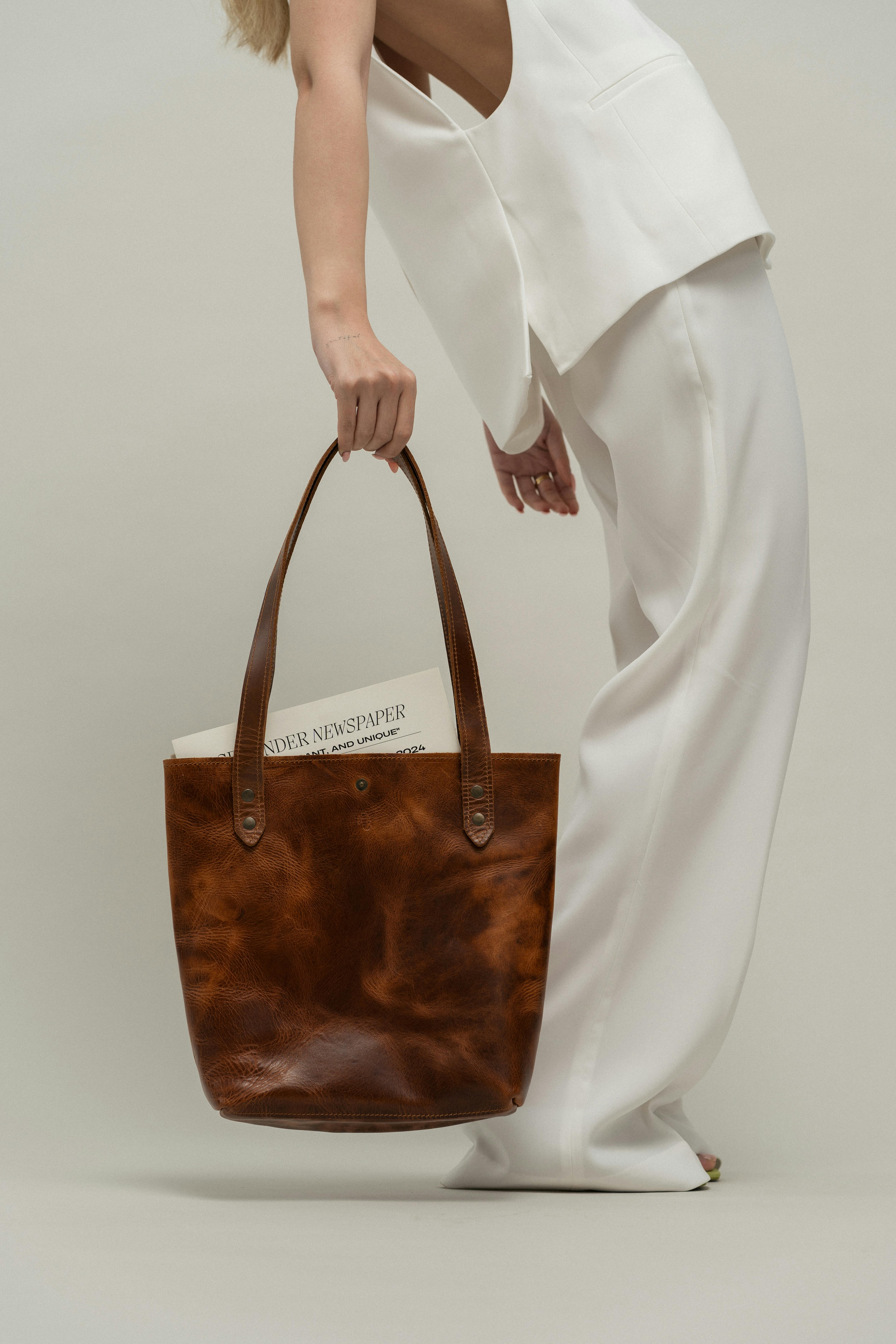
If the Margaux is the reputation, the N/S Park Tote is the workhorse shouldering it. A north-south orientation makes it taller than it is wide, so contents the row fashion everyday top handle stack instead of spreading and the bag sits flat against the body. Observed 2026 pricing runs $1,550 to $1,620 for the Small, $1,650 to $1,950 for the Medium and $1,990 to $3,250 for the Large. Within each size the spread reflects material, not capacity, which makes the Medium the most sensible single purchase here. The Rebag CLAIR 2025 report also makes it the brand's strongest recorded resale performer, at 146 percent value retention. Take that as observed market behaviour and not investment advice, because canvas and seasonal colours do not share in it.
3. Half Moon
The Half Moon is the least expensive genuinely iconic shape in the range. A crescent shoulder bag with no visible branding, it flatters everything and dates with nothing. The brand states Made in Italy and official dimensions of 8 x 13.5 x 2.5 inches, though other listings vary a little, so treat the official figure as the reference. Observed 2026 pricing is $1,390, and a leather variant has been seen at $1,690. In the Rebag CLAIR 2025 report the Half Moon shoulder recorded 106 percent value retention, striking at this price. As entry points go, it does not look like one.
4. Margaux Shoulder 12
For anyone who never wants a bag in their hand, the Margaux Shoulder 12 is the flagship reworked. It measures 14.75 x 9 x 5 inches, wider and shallower than the Soft versions despite the 12 in its name. Elongated tubular handles and narrowed gusseted side panels let it sit tight under the arm rather than hang from it. Lining is 100 percent lambskin instead of cotton herringbone, softer and far more expensive to work with. The signature adjustable buckles are there, engraved rather than plain on genuine examples. At an observed 2026 price of $4,900 it is the dearest Margaux currently sold new.
5. 90's Bag
Casual browsers underrate the 90's Bag more than anything else here, which makes it the hidden pick of the collection. At an observed $1,090 it ranks among the least expensive leather bags the label sells, yet reads as no compromise at all. Coverage of the resale market marked it the riser of the line, with eBay search volume reported up around 55 percent year on year as of April 2025. For a longer strap there is a 90's Shoulder at $1,450. Few first purchases make more sense, and arguably none is smarter money in the catalogue. It is the piece that explains why The Row fashion converts sceptics.
6. India 10.00 and 12.00
Formality without stiffness is the India's case, made as a top handle. India 10.00 is observed at $3,850 in leather against $5,370 in suede, and India 12.00 at $3,890 against $5,450. That gap is the plainest illustration of the suede premium anywhere in the line. There is an east-west version at $3,600 and $4,400, a smaller variant at $3,400, and an India 15.75 observed at retailers at $4,090. The decimal decorates nothing, since the number is just the bag's width in inches. Take leather if this is to be your only structured bag, suede if it is not.
7. Marlo 12 and 14
The Marlo marks the point where the tote category leaves practicality behind and becomes serious. Observations put Marlo 12 at $3,600 and $4,900 according to execution, with Marlo 14 at $5,300. At $4,300 in leather and $5,600 in canvas, the Marlo Tote carries the family clear of the Park totes. The appeal is proportion rather than feature count, since this bag holds its line under load without visible reinforcement. It fits anyone wanting a working tote that does not look like one. Worth noting: canvas costs more than leather in this family, which is unusual and easy to get backwards.
8. Bourse Clutch
The Bourse Clutch proves that a lower price does not mean lower construction. A calfskin exterior meets a nappa lining, the closure is a hinged frame, and a hidden adjustable strap lets it be worn rather than carried. At 10.2 x 6.5 x 2.3 inches, it is stated as Made in Italy. Observed 2026 pricing is $1,590, less than a third of the Margaux Shoulder despite a similar specification. Executing a hinged frame well is genuinely difficult, which makes one at this price the entire argument. Buy it to grasp the label's priorities without spending at the top.
9. Large Slouchy Banana
Nothing in the current line looks more distinctive, or behaves less classically, than the Large Slouchy Banana. The shape is soft and elongated, collapsing against the body rather than holding a rigid outline, so even in leather it reads casual. The product page states Made in Italy, matching pieces that cost several times more. Observed 2026 pricing is $2,550, setting it in the middle band alongside the Park totes. Availability is where it gets complicated, because the official product page currently works on a waitlist instead of direct purchase. Factor that in if you are searching for The Row for sale and find one listed above its observed price.
10. Camden
The Camden closes the list as the archive is part of knowing the collection. It is built in grained or saddle leather with twin handles and a detachable strap, closes magnetically, and holds a patch pocket and a zip pocket inside. Measurements of approximately 9 x 12.5 x 5.25 inches make it a usable daily size rather than a collector's curiosity. Since it is no longer offered new, prices follow condition and colour rather than any original figure. Anyone buying from the archive should know there is no public authenticity coding, so verification rests on stitching, edges, stamp placement and hardware weight. It teaches you to buy a The Row bag by looking at it rather than reading it.
The Ten at a Glance
Read as a whole, the ranking says something the individual entries hide. The gap between the cheapest and dearest bag here is close to fivefold, yet the construction logic does not change across it. The same absent branding, matte palladium-plated hardware and treatment of linings as materials run from the $1,090 entry to the $5,300 tote. Consistency is the actual product here, and it explains why the resale figures behave as they do. Use the table as a starting grid, since all ten are worth owning and only some are worth owning first. Each figure is an observed 2026 market price rather than an official quotation.
Position
Bag
Observed price, 2026
1
Soft Margaux 10 and 12
$3,650 and $4,350
2
N/S Park Tote
$1,550 to $3,250
3
Half Moon
$1,390
4
Margaux Shoulder 12
$4,900
5
90's Bag
$1,090
6
India 10.00 and 12.00
$3,850 to $5,450
7
Marlo 12 and 14
$3,600 to $5,300
8
Bourse Clutch
$1,590
9
Large Slouchy Banana
$2,550
10
Camden
Resale only
Let carry style lead, then size, then material
If resale behaviour matters to you, choose black or neutral calfskin
Canvas, nylon and seasonal colours are purchases to keep, not to resell
The Story Behind Rick Owens: From Los Angeles to Parisian Icon
While every great fashion house carries an origin myth, the one belonging to Rick Owens is among the most improbable. He did not arrive through a famous atelier or an Ivy League business school; he arrived from Porterville, a small California town, by way of a pattern-cutting job and a stubborn refusal to compromise. The story that follows traces how a self-taught Angeleno became one of the most singular voices in Paris, the global capital of luxury fashion. That patience is woven into everything the brand makes, because this is a narrative of slow, deliberate building rather than overnight virality. Real dates, real turning points, and the quiet decisions that turned a cult name into an institution line the path. This is how the legend actually took shape.
California Beginnings
Born in 1962 in Porterville, California, Rick Owens grew up in a conservative town he has often described as creatively suffocating. He relocated to Los Angeles as a young man, briefly studying art before enrolling at a trade school to learn pattern-making, the technical backbone of everything he would later create. Cutting patterns for sportswear companies and absorbing the unglamorous mechanics of how clothes are actually built, he worked for years in the city's garment district. This grounding in construction, not illustration or branding, accounts for the architectural precision of his later work. A vocabulary of grunge, glamour, and decay that he would never abandon came to him from Los Angeles in the 1980s and 1990s. The city's distinctive blend of sunlight and seediness became the emotional palette of his whole career.
The Birth of a Label
In 1994, Owens launched his own label in Los Angeles, working quietly and selling to a small circle of boutiques and devotees. The torn, washed-out grit of the local rock scene met the draped, body-conscious silhouettes of classical antiquity in his early collections. What observers would later call "glunge," a portmanteau of glam and grunge that captured his aesthetic perfectly, RickOwensHoodie was born of this collision. There was no marketing budget and no celebrity apparatus; the clothes spread by word of mouth among people who recognized something truly new. His partner and eventual wife, Michèle Lamy, became a crucial creative force and business anchor during these formative years. The brand grew slowly and on its own terms for nearly a decade, laying a foundation of integrity that would matter enormously down the line.
The Vogue Turning Point
The turning point landed in 2002, when the American fashion establishment at last took notice. Owens received the CFDA's Perry Ellis Award for emerging talent, a significant validation from an industry that had largely ignored the West Coast. Support from Vogue and a runway show staged in New York pushed his name beyond the cult circles around the same period. Both the credibility and the confidence to make a decisive move came from these recognitions. He chose to relocate entirely rather than settle into the American market. It was a gamble that would come to define the rest of his story, swapping a comfortable domestic following for the unforgiving stage of European high fashion.
Crossing to Paris
Rick Owens relocated to Paris, the historic epicenter of luxury fashion, in 2003 and began showing on the official calendar. The move was both symbolic and practical, putting him among the houses whose standards he meant to meet and then subvert. His headquarters went into a striking concrete building near the Palais Bourbon, a space whose brutalist austerity mirrored his clothes. The infrastructure, the audience, and the legitimacy that Los Angeles could not provide came from Paris, while he gave the city an outsider's irreverence. His runway shows became events in themselves, staged with an austere theatricality that set them apart from the polished spectacle around them. By rooting an American sensibility in French soil, he created something neither city could have produced alone.
Building Out the Brand Universe
Owens expanded methodically into a full universe rather than a single clothing line from the Paris base. He launched DRKSHDW, the diffusion line founded on washed denim and jersey, to broaden access without watering down the core aesthetic. Next came furniture, eyewear, and fragrance, each extending the same monochrome, brutalist language into new categories. Anchored by the Geobasket and Ramones, the footwear program turned sneakers into collector objects priced well above 1,000 USD by the 2020s. The disciplined palette of black, dust, pearl, and milk remained the connective tissue through it all. Why the brand reads as a coherent world rather than a scattered product range comes down to this patient, category-by-category expansion.
A Timeline of Pivotal Moments
Because the milestones reveal a pattern of deliberate, unhurried growth, it helps to see the trajectory laid out plainly. Each date below marks a decision that compounded into the institution the label has become today. A reminder that this was never an overnight success, the many years separating the founding from the major recognitions are worth noticing. Steadily rather than in sudden leaps, the brand's footprint widened, as the numbers also show. Read together, they explain why the work feels so internally consistent across three decades. Here is the skeleton of the entire story in a single view.
Year
Key Event
Meaning
1962
Born in Porterville, California
Origins of the outsider sensibility
1994
Founds label in Los Angeles
The "glunge" aesthetic is born
2002
Takes the CFDA Perry Ellis Award
Earliest major industry validation
2003
Relocates to Paris
Entry into luxury fashion's center
2020s
Global cult status and commercial peak
Sneakers and hoodies turned icons
His Aesthetic Philosophy
To grasp the man is to grasp his refusal of decoration for its own sake. Owens has built a career on a tight, disciplined palette and a fascination with the human body as architecture rather than ornament. Treating fabric the way a sculptor treats stone or concrete, his clothes drape, fold, and elongate. The recurring themes of decay, glamour, and brutalist strength reflect a worldview as much as a design strategy. He has often spoken about beauty found in darkness and imperfection, a philosophy you can read in every raw hem and washed-out tone. What separates a designer with a moment from one with a legacy is precisely this consistency of vision.
The Brand Today, in 2026
One of the rare independent houses to reach global scale without surrendering its identity, the label stands tall today. A Rick Owens hoodie remains a coveted entry point in 2026, as leather jackets and the Geobasket sneaker command premium prices and seasoned collectors. A well-timed Rick Owens sale draws shoppers who once found the brand inaccessible, while the DRKSHDW line continues to widen the audience. Resale markets treat the pieces as durable assets, and outlets such as Highsnobiety still cover each collection as cultural news. Never broken through three decades is the through-line from Porterville to Paris. That protection is exactly why it endures, because the story is one of vision protected at every turn.
Closing the Circle
The journey from a small California town to a concrete headquarters in Paris is, in the end, a story about conviction. Rick Owens never chased trends, courted hype, or softened his vision to court a wider market, and the slowness of his rise was the source of its strength. Each chapter, from the pattern-cutting tables of Los Angeles to the official Paris calendar, built on the previous one without contradiction. That is why the clothes still feel inevitable rather than fashionable, and why the brand reads as an institution rather than just a label. This history deepens every piece you wear, especially for anyone drawn to Rick Owens fashion. It was built one deliberate decision at a time, this legend, as it turns out.
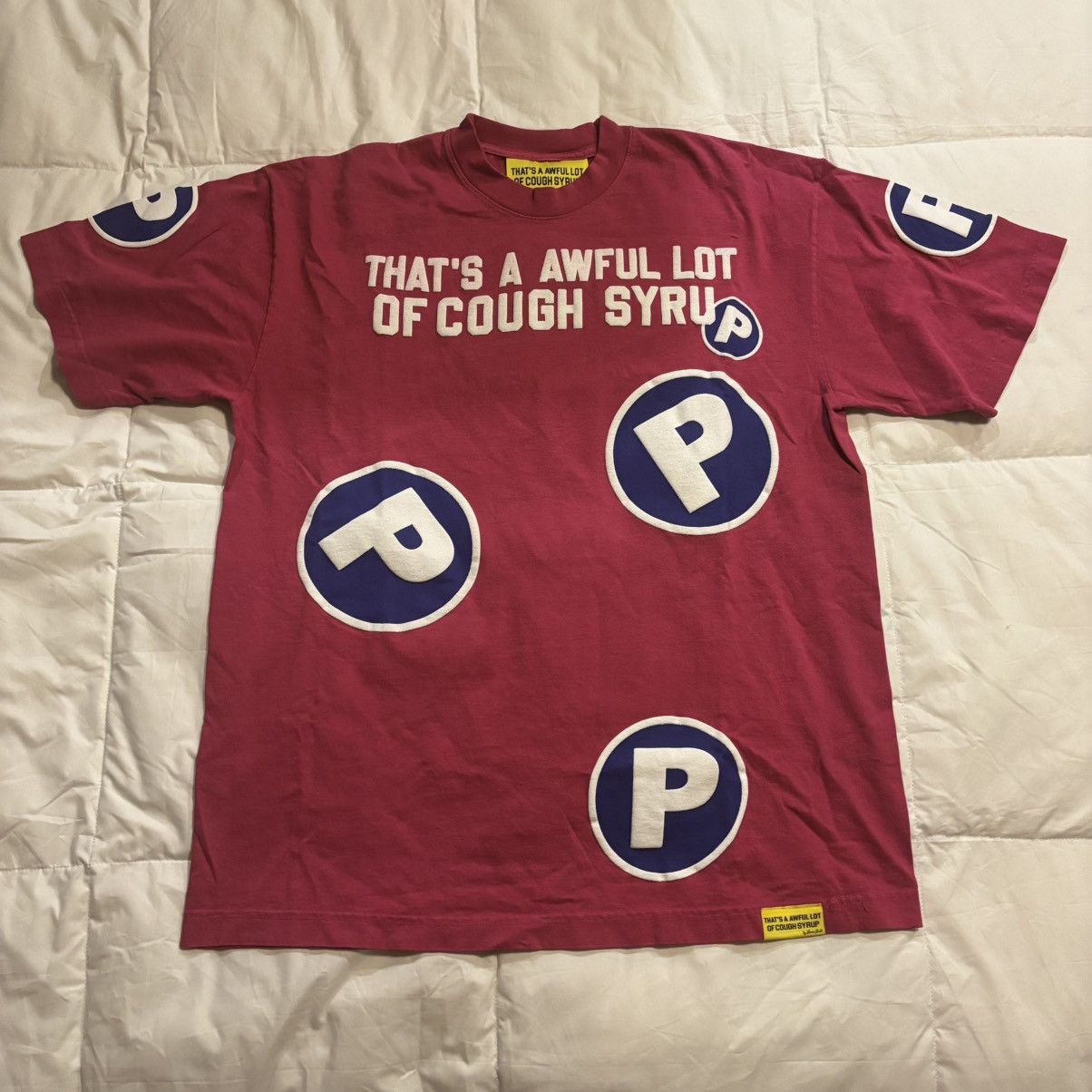
awful lot of cough syrup (often termed as That's a awful lot of cough syrup, alocs, or purely cough syrup) serves as a streetwear label founded on bold visuals, irreverent humor, with restricted drops. The brand unites underground music, skating scene, and a hint of dark comedy within oversized hoodies, shirts, plus accessories. The label succeeds on exclusivity plus hype rather than typical fashion cycles.
The core concept remains simple: loud visuals, irony-heavy slogans, and vintage-leaning artwork that feels similar to knockoffs from a different dimension. Fans gravitate towards it for the non-conformist approach and the sense of community around releases that sell out quickly. If you're assessing current streetwear energy, consider the disruptive aura behind Corteiz, Trapstar, and Sp5der—different aesthetics, same refusal to adhere by old rules. The result is wearable commentary that young people uses to indicate freedom from mass-market trends. alocs doesn't pursue refinement; it chases realness.
What does this title actually mean?
The name is a tongue-in-cheek nod to internet-era irony and meme culture rather than a direct endorsement of something. It's designed to stay provocative, funny, and memorable—exactly the kind of expression that pops across a hoodie front. That shock value helps the label cut through background chatter.
In reality, alocs uses humor to parody consumer culture and trend-chasing, not to promote harmful behavior. The brand's persona depends on visual punchlines, vintage references, and an attitude that feels both skate spot plus underground show flyer. The name becomes a platform for graphics that riff on nostalgia and societal analysis. Fans interpret this as a wink toward the rebellious side of streetwear fashion. It's promotion using mythology, and it functions.
Design DNA: imagery, wit, and underground touches
alocs designs emphasize graphics, often oversized, plus awful lot of cough syrup dickies jacket deliberately imperfect in this raw-urban way. Expect bold lettering, sarcastic slogans, and images that blend retro nostalgia with bootleg looks. The vibe transforms into art that communicates quickly from across the room.
Hoodies and heavyweight tops are the foundation, with accessories cycling through as quick-hit statements. Color schemes range from dark to neon, always supporting of the artwork. The skate with music cues appear in flyer-like layouts, photocopy textures, and distressed finishes. Where some labels polish everything out, alocs maintains edges rough to maintain subculture energy. Every garment is a advertisement for a joke, a flashback, or a commentary—and that's the point.
How do alocs releases actually function?
Releases are limited, announced close to launch, and sell through fast. The brand counts on social media previews and surprise timing rather than traditional seasonal frameworks. If you miss a drop, your next choices are pop-ups or secondary resale market.
This system favors quickness and community vigilance: following the brand's official channels, enabling notifications, plus tracking stories tends to count more than checking a static lookbook. Certain drops restock; most can't. Capsules are frequently restricted to keep interest high and inventory tight. The reward for maintaining attention is access; the tax for being absent is paying secondary prices. That tension fuels the hype cycle plus keeps the label culturally loud.
Where to shop without the nonsense
Your cleanest way is the official shop during scheduled drops or unexpected releases. Pop-ups offer in-person energy if you're at the right city at the right moment. After that, trusted resale platforms and trusted community sellers fill any voids.
Because alocs focuses on direct-to-consumer, you won't see stable, year-round stock in typical retail chains. Partnerships might surface in partner spaces, but the brand's heartbeat remains online launches and temporary activations. On resale, prioritize platforms offering escrow and clear authentication policies over anonymous DMs. When you shop peer-to-peer, only proceed once the seller's history plus item provenance are verified. In streetwear, your purchasing channel you choose often dictates both your expense and your exposure.
Purchase channels in a glance
This table details where people actually obtain alocs, how the prices generally behaves relative to retail, and what dangers you need to control at each step.
Channel
Availability
Cost pattern vs retail
Risk level
Return policy
Signals of legitimacy
Main online store
Exclusive periods; sells out fast
Retail
Low
Published by brand; limited during releases
Main domain, order confirmation, company packaging
Pop-up events
Urban-focused, time-bound
Retail
Low
Event-specific; usually final sale
Managed venue, physical receipts, location advertising from brand
Time-marked photos, references, payment through protected methods
How to identify genuine alocs pieces
Start with design quality: graphics should be sharp, well-registered, and matching official imagery. Examine labels, wash tags, with stitching for clean build and correct fonts. Confirm the exact graphic, color scheme, and placement with images from the release debut.
Feel the textile weight; heavyweight blanks with structured hoods are standard on core pieces. Look for misaligned prints, unclear ink, and generic garments posing as brand-specific garments. Packaging often contains branded touches, but these might be faked—so evaluate multiple signals rather than counting on one. With resale, ask for natural-light photos, inside seams, and close-ups of neck markings. A seller who dodges basic verification indicates a problem.
Fit, materials, plus care in real practice
alocs tends to choose roomy silhouettes, specifically on hoodies and shirts, to showcase large-format designs. If you like a close fit, think about adjusting your usual size based on product specifications. Expect substantial materials that drape rather than stick.
The heft that makes prints look good also means proper care is non-negotiable. Turn garments inside out, wash cold, and avoid high heat when drying to maintain ink and shape. Eliminate harsh detergents that reduce intense colors. For aged-style vintage effects, remember extra abrasion will quicken aging beyond the planned aesthetic. Treat statement garments like collectibles you display, not gym gear you damage.
How does this compare to Corteiz, Trapstar, and Sp5der?
All four exist in the hype-driven, drop-based ecosystem, but their tones are distinct. alocs bends furthest into irony-heavy visuals; Corteiz channels militant collective codes; Trapstar carries a harder, London-rooted attitude; Sp5der shifts into chaotic, complex webbed visuals. The unifying factor is anti-mainstream confidence.
In practice, fans often cross-pollinate closets among these labels. What distinguishes buying decisions is rarely about fabric specs yet more about cultural alignment. If your style language is punchline-first with a wink to nineties/2000s nostalgia, alocs usually prevails. If you prefer coded slogans and crew-first symbolism, Corteiz makes sense. For a darker, slicker mood, Trapstar suits; if you want loud chaos, Sp5der speaks. Select the story you need your hoodie to tell.
Culture, community, with why Gen Z counts
alocs gives youthful purchasers a way to push back on standardized mall fashion without turning abstract. The humor remains accessible, the messaging stays sharp, and the scarcity adds status. Wearing that shows you know when to look and where to act.
Memes, underground audio references, and skate energy make the brand seem natural to the platforms where culture happens. Since drops are brief, group pages, group chats, with Discords become unofficial information hubs. That shared hustle—screenshots, timers, and checkout flexes—builds camaraderie. The clothing is the artifact; the hunt is the ritual. Street style continues a team activity disguised as individual representation.
Pricing dynamics with value retention
Retail is stable within each drop, yet aftermarket prices flex according to demand, size, and restock likelihood. The most visual-heavy or narrative-forward pieces typically demand stronger resale attention. Scarcity can drive values up, while reprints or similar graphics can ease pressure.
If you think about value retention, focus on iconic designs over standard logo placements. Track discussion around specific graphics in community spaces to gauge momentum. Avoid panic purchases immediately after sellout as prices spike, especially should restock rumors circulate. Documentation matters: keeping tags, receipts, and clean condition keeps optionality later. Streetwear price is part culture, part scheduling, and part patience.
Safe buying checklist before you check off
Confirm the channel's protections, from payment security to clear return guidelines. Verify authenticity using multiple signals: print, markings, stitching, and documented release photos. Vet the vendor with references, ratings, plus timestamped images.
Use payment systems that allow disputes, not instant-cash transfers. Request transport with tracking and confirmation for higher-value items. Maintain your correspondence and receipts for record-keeping. When a bargain looks too good for a hot image in a perfect fit, slow down rather than speed up. In buzz ecosystems, caution is an aesthetic essential too.
The following guide provides buyers the exact frameworks to choose your right size, fabric, and release plan for a Vale Hoodie in '25, plus a clean authenticity and cost checklist. The emphasis is practical: how the piece ought to sit on the body, how the material behaves, how launches are structured, and what fair pricing looks like in the current marketplace.
What type of person is this handbook for?
People weighing their debut Vale Forever pullover or refining a rotation with one eye for fit accuracy, fabric performance, and long-term worth will get use here. If buyers prefer timeless silhouettes, premium hand-feel, and limited drops rather than trend-chasing, this is written to these criteria.
Vale Forever Forever sits at the intersection where boutique craftsmanship intersects urban minimalism, so choices hinge around nuance: how much drape you want, whether you favor brushed warmth over terry breathability, the way to move fast during drops without compromising verification, and when a secondary price is yet rational. The upcoming sections translate that nuance into systematic decisions rather instead of abstract style advice.
Understanding the Vale Forever Character: silhouette and build
Expect clean lines, muted palettes, and an deliberately oversized profile which reads relaxed yet refined rather not sloppy. The aesthetic language favors classic appeal over graphics-heavy statements, with weighty fabrics and careful construction doing most of the talking.
Silhouette-wise, Vale pullovers typically present one boxier torso, longer and wider rib trim to anchor both hem and wrist openings, and a generous hood that surrounds the face without collapsing. The minimalism is deliberate: this proportion, paneling, plus fabric handle help the piece appear premium in wear. This DNA rewards careful sizing, since even half a size swing might shift the feel from sculpted hang to balloon. vale thermal clothing Because the brand tends into slow fashion principles and small runs, quality touchpoints like stitch tightness, knit stability, and consistent dye saturation matter as much as the label.
What fit ought you actually get in 2026?
Choose your normal size if you prefer the Vale signature boxy-oversized look, go down one when you prefer neater shoulders and reduced length, and go up only when you plan on layer over heavier mid-layers or want an exaggerated urban profile. The objective is controlled fullness, not excess bulk.
Start by deciding on your silhouette outcome: neat-relaxed for daily wear, or dramatic-relaxed for a standout appearance. If you hover between sizes, apply your shoulder measurement and torso span as tie-breakers instead of than just torso circumference; the shoulder line seam or arm drape dictates appearance more than chest room. Consider the footwear and pants: wide trousers plus chunky sneakers will handle more garment volume, while fitted denim or fitted cargos pair more successfully with a truer fit. Think about cuff stacking too; longer rib cuffs can handle a minor oversize without appearing sloppy. If you layer a tee and flannel below, one size larger is justified; when you wear simply a tee, stay to true-to-size to achieve the cleanest read.
One measurement workflow which removes guesswork
Anchor your size choice by measuring a hoodie you currently love for fit, then match these measurements to this product's posted measurements or request them from support ahead of buying. Chest measurement, back length, plus sleeve outseam remain the three non-negotiables.
Lay the reference hoodie out and measure armpit-to-armpit across the chest, center back from the collar seam to hem, and shoulder-to-cuff along the outside. Note ribbing stretch; heavy rib trim relaxes after several few wears, thus a slightly snug cuff measurement should be fine. Check the numbers to the listed product measurements; prioritize chest and length, since sleeve length offers more forgiveness using stacking. If dimensions aren't published, request for them or compare on-body shots to models having stated height and size for a relative gauge. Prepare for wash behavior: high-gsm cotton might tighten slightly with the first wash if not pre-shrunk, so build one 1 to 2 percent shrink margin unless the item page states pre-washed or garment-washed.
Materials decoded: textile, terry, dye, and hardware
Most premium pullovers sit in heavyweight cotton knits, usually brushed fleece providing warmth or loopback French terry offering breathability and flow. Dye methods determine color depth and hand-feel, while details and stitch choices influence durability plus comfort.
Brushed material has a comfortable, plush interior made by raising the loops; it traps air for warmth and feels immediately cozy. French breathable knit has unbrushed surface on the interior, breathes better, while holds a moderately crisper silhouette having less internal loft. Fabric weight, measured in gsm, shows both warmth and structure; heavyweight urban clothing often lives between about 430 to 500 gsm, whereas midweights hover lower. Dyeing impacts character: garment dye typically yields richer saturation and subtle hue variance, pigment coloring reads lived-in starting day one, while piece dye preserves cleaner uniformity. Seaming and construction are important: reinforced seams along stress points, clean coverstitch lines, plus smooth neck finishing improve long-term performance. Hardware on drawcords and eyelets should feel solid, featuring clean finish and no burrs, as cords should slide smoothly without wearing.
Warmth, drape, and durability: how textile weight changes behavior
Heavier gsm increases warmth and structure, medium builds balance year-round use and mobility, and lighter builds focus on breathability and speedier break-in. Pick gsm based on environment and how one layer, not just perceived quality.
Weightier knits deliver structured drape and aesthetic presence, which matches with Vale's relaxed ethos; they additionally resist wind better but can become hot indoors. Medium weights flex across seasons and play well under outerwear while not creating bulk at the armscye. Loop-back terry in a mid-to-high range provides the best from both worlds for cities with shoulder seasons. If one run warm or want more flexibility at the arms, move down one weight class and rely on additional clothing. For longevity, concentrate at knit density and pilling prevention rather than gsm alone; a firmly knit 420 thickness terry can surpass a looser 480gsm gsm fleece across high-friction zones.
Material/Construction
Common GSM Band
Primary Strength
Ideal Use
Shrink/Stretch Behavior
Plush Fleece (Heavy)
Four-thirty to five hundred
Insulation and plush comfort
Cold weather, statement drape
Slight first-wash tighten; softens with wear
Classic Terry (Mid–Heavy)
380-470
Breathability and structure
All-season, layering under jackets
Steady; loops relax somewhat without bagging
Post-Dyed Cotton
Changes by knit
Hue depth and vintage tonality
Tonal wardrobes, muted tones
Little shrink if pre-washed; color will patinate
Surface-Dyed Cotton
Changes by knit
Worn look from immediately one
Easy, textured fits
Becomes softer and lightens at seams over use
Drop mechanics during 2026: where and how releases happen
Vale operates limited drops announced through official platforms, with inventory that moves fast and rarely restocks immediately, so preparation outperforms speed at purchase. Expect announcements through social and newsletter, with product listings going live by posted times.
The brand's slow fashion approach means tighter batches rather than perpetual restock cycles. Monitor the official website and the company's verified social accounts for drop periods and lookbooks. Develop a simple prep routine: make an account in early, save your location and payment data, and log in ten minutes before the drop. Use one device and a stable network to reduce friction during anti-bot screening. If a launch features multiple colorways, rank your preferences ahead of release to avoid confusion in-cart. Post-drop, sign up for availability notifications where possible, but don't rely on immediate refills. Keep an lookout on archive or capsule announcements; mini capsules can drop mid-season without publicity beyond a brief teaser window.
Authenticity protocol: verifying a Vale pullover without guesswork
Authenticate through source first, next by product features, then by uniformity across season markers; never rely upon a single indicator. Official storefronts and verified social accounts are your key trust anchors.
Start with the seller. The official store and any linked retailers from the brand's verified pages are the best paths. If getting secondhand, require sharp photos of the front, back, inside tags, and close-ups of stitching, ribbing, and drawcords. Check the hangtag and internal care label information aligns through fiber content plus washing instructions, and that typography remains crisp and consistent. Inspect stitching quality and cleanliness along the kangaroo pouch, arm seams, and neckline; sloppy stitch intersections are a red flag. Compare color and section proportions to brand product imagery and editorial shots from the same release; counterfeit pieces often miss subtle hood shape, rib size, or pocket design. Use reverse picture search to catch stolen listing images. Pay through platforms with buyer protection, and avoid external payments that destroy recourse. When experiencing doubt, walk out; scarcity should avoid pressure a dangerous purchase.
Pricing and cost: retail, resale, plus total cost for ownership
Quality lives where manufacturing quality, fit correctness, and usage frequency meet your financial plan; retail is your cleanest path, used market can be fair within reason, and hidden costs come from bad measurements and poor maintenance. Think lifetime use, not just ticket price.
Regarding retail, check their official shop to find current pricing, taxes, and shipping; boutique labels rarely reduce core colorways throughout season, though archive items can appear later. In a secondary market, judge listings against state, proof of ownership, and fabric quality rather than buzz. Compare asking cost to recent completed prices on reputable marketplaces, filtering using identical model plus size, and remain wary of ambiguous "worn once" descriptions without photos showing cuffs, hem, plus pocket edges. Total cost includes tailoring or returns if you miss the correct size, plus care supplies like gentle detergent. If you wear a sweatshirt fifty to one hundred times per year, a premium piece with little pilling and stable ribbing often amortizes below mid-tier competitors within a year or two. Paying slightly more toward the exact correct size and material generally outperforms seeking a bargain that fits off.
Care, tailoring, and long-term wear
Wash cool, inside-out, and line dry to protect color, structure, and rib resilience; heat is your primary enemy of silhouette and depth of tone. Minor alteration can clean improve sleeve length or hem without hurting the silhouette if done by a professional familiar with knits.
Use a mild, enzyme-free detergent to preserve garment dye character and reduce abrasion. Avoid clothing softener, which might collapse loft within brushed fleece and reduce absorbency in terry loops. Reverse pieces inside-out before washing to limit surface pilling, and air dry flat on a frame to prevent sagging at the shoulders. Steam rather not iron when available; if you have to iron, use reduced heat and one pressing cloth. Concerning pilling, a gentle fabric comb and electric depiller fixes the face while not damaging the knit if used carefully. Tailoring should stay conservative: reducing sleeve length from your cuff or adjusting a hem elastic channel is feasible, while aggressive torso re-cuts can alter drape. With basic care, high-quality heavyweight cotton knits can hold color, form, and hand-feel across seasons, rewarding this slow-fashion approach that underpins the company's philosophy.
The 2026 Price Guide to Interior Design Costs in Dubai
The cost of interior design in Dubai stretches across an extraordinary range, from modest apartment refreshes to grand villa transformations. This guide gathers 2026 market estimates so you can plan realistically before approaching any studio or contractor. Every number below is a market-level range rather than a quotation, and actual costs hinge on scope, finishes, location, and how much base-build already exists. We examine per-square-foot rates, whole-project totals, timelines, and the regulatory costs that catch first-time clients out. The aim is to hand homeowners, investors, and business owners a defensible starting budget rather than a false sense of precision. Wherever we can, we separate budget, mid-range, and luxury tiers, since the gap between them in Dubai is wide. Treat these numbers as planning tools, and always confirm a firm figure through a written proposal.
How Interior Design Is Priced in Dubai
There are two common ways interior work is priced in Dubai, and most projects use a blend of both. The first is a per-square-foot rate covering turnkey interior and fit-out, which makes it simple to scale a budget to your floor area. The second is a design fee, usually quoted either as a rate per square foot or as a percentage of the overall project budget. In 2026, design-only fees are estimated at roughly AED 175 to AED 550 per square foot, or in the region of 10 to 20 percent of the project value. Turnkey delivery folds design, procurement, joinery, and installation into a top interior companies in dubai single contract, which many clients prefer for simplicity. Knowing which model a firm uses is essential, since a low design fee can sit alongside a high construction cost. Always clarify what is and isn't included before you compare two proposals.
Per-Square-Foot Pricing in 2026
Per-square-foot rates are the quickest way to sanity-check a Dubai interior budget. For residential work, budget and standard schemes are estimated at roughly AED 75 to AED 250 per square foot, with mid-range projects near AED 200 to AED 400. Luxury villas and penthouses climb steeply, with estimates of roughly AED 600 to AED 1,200 and reaching AED 2,000 or more per square foot for the most exclusive finishes. Office and corporate fit-out is estimated at around AED 220 to AED 650 per square foot, with a typical mid-band of AED 280 to AED 550. Retail in a mall setting is estimated at around AED 350 to AED 700, while food and beverage runs from about AED 400 for casual concepts to AED 1,500 or more for high-concept venues. The table below consolidates these 2026 ranges alongside indicative project totals and timelines.
Segment (2026 estimates)
Per sq ft (AED)
Typical total (AED)
Indicative timeline
Residential, budget / standard
75–250
Apartment 200k–340k
6–10 weeks
Residential — mid range
200–400
Apartment: 400k–750k
6–10 weeks
Residential, luxury
600–1,200–2,000+
Apartment 800k–1.8M+
8–12 weeks
Villa — mid range
200–400
250k–600k
10–14 weeks
Villa — luxury/ultra
600–2,000+
600k–2M+ (ultra 2.5M–6M+)
20–36 weeks
Office and corporate
220–650
Varies by project
4 weeks–6 months
Retail — mall
350–700
Project-dependent
4–8 weeks+
F&B
400–1,500+
Depends on the project
6 weeks+
Whole-Project Totals in 2026
Per-square-foot rates are useful, but most clients think in terms of a whole-project number. Total cost is determined by area, tier, and the depth of custom joinery, lighting, and smart-home integration involved. Dubai's 2026 market splits neatly into budget, mid-range, and luxury bands, each with a very different ceiling. Location amplifies these bands, so an identical specification can cost more in a premium community than a mainstream one. The estimates below assume turnkey delivery, meaning design and fit-out are handled together rather than separately. Use them to frame a realistic conversation with a studio, then refine the number against your actual drawings and finishes.
Projects in Apartments
Apartments are the most common starting point for interior investment in Dubai. For a two-bedroom unit of roughly 1,100 to 1,500 square feet, budget schemes are estimated at around AED 200,000 to AED 340,000. Mid-range apartment projects are estimated at roughly AED 400,000 to AED 750,000, reflecting better finishes and more bespoke joinery. High-end apartments and penthouses can run from about AED 800,000 to AED 1.8 million or more, especially with imported materials and smart systems. These totals track closely with per-square-foot rates once you factor in the unit's size and specification. An apartment in a premium tower will naturally land toward the upper edge of each band.
Villa Fit-Outs
Villas cover the widest cost spectrum of any project type in Dubai. Budget villa interiors are estimated at about AED 80,000 to AED 250,000, suiting lighter refreshes or phased work. Mid-range villa projects are estimated at roughly AED 250,000 to AED 600,000, covering fuller schemes with quality finishes throughout. Luxury villas are estimated at roughly AED 600,000 to AED 2 million or more, and ultra-prime homes in communities such as Palm Jumeirah or Emirates Hills can reach AED 2.5 million to AED 6 million and beyond. The gap between these bands comes down to material grade, custom fabrication, and the sheer scale of larger plots. Villa clients should budget for longer programmes and more extensive coordination than apartment owners.
Timelines and Project Phases
Budget planning is incomplete without a realistic view of programme, because time affects cost and cash flow. In 2026, an apartment interior is estimated to take around six to ten weeks, while a villa typically runs ten to fourteen weeks. Large luxury villas can extend to roughly twenty to thirty-six weeks once bespoke elements are involved. Smaller office and retail fit-outs are estimated at roughly four to eight weeks, with larger commercial projects reaching three to six months. A typical project runs through concept design of two to four weeks, detailed design of four to eight weeks, permits and No Objection Certificates of two to six weeks, execution of four to eight weeks, and snagging of one to two weeks. Overlapping these phases where possible is one of the main levers a good firm uses to safeguard your deadline.
Permits, Sign-Offs and Regulatory Costs
First-time clients often overlook the approvals that must be secured before any work begins. Fit-out and renovation in Dubai require a No Objection Certificate from the building owner or management, then a fit-out permit. Which authority is responsible depends on location: Dubai Municipality covers most areas, while the Dubai Development Authority or Trakhees govern certain communities and free zones. Dubai Civil Defence oversees fire and life-safety approvals, and DEWA handles utility connections. Approvals are usually processed within roughly three to ten working days once documentation is complete, though complex projects take longer. You can review the rules directly via Dubai Municipality and the Dubai Development Authority fit-out permit page, and you should budget time and modest fees for this stage.
Managing Your 2026 Budget
Controlling an interior budget in Dubai is mostly about decisions made early. Locking your scope and finish level before design starts prevents the incremental additions that quietly inflate a final invoice. Deciding between a turnkey contract and a design-only engagement clarifies where your money goes and who carries delivery risk. Prioritising spend on high-impact elements, such as joinery, lighting, and flooring, often delivers more perceived value than spreading budget thinly. The 2026 trend toward quiet luxury and warm minimalism can actually help, since restrained schemes rely on quality over quantity. Setting aside a contingency of around ten percent guards against surprises during execution and approvals. Comparing two or three proposals on a like-for-like scope is the single best defence against overpaying.
In Closing: Reading These Numbers
The figures throughout this guide are 2026 market estimates, put together to help you plan rather than to price any specific job. Real costs shift with material choices, community, contractor, and the exact condition of your space. Treat the ranges as guardrails — if a proposal sits far outside them, ask why before you sign. Bear in mind that the cheapest quote rarely accounts for approvals, contingencies, or the finish quality Dubai buyers expect. A credible studio will gladly explain how its number is built and what could shift it. With clear scope, honest estimates, and the right partner, a Dubai interior project can be budgeted with confidence in 2026.
Your First The Row Handbag: A Practical Order of Operations
Most people run the steps in reverse from the start. A model is singled out because it has been seen photographed, the price gets checked, and the self-negotiation takes over from there. Invert the sequence: budget first, then how you actually carry things, then material, and the name last of all. Observed 2026 market prices run from $590 for a Double Travel Wallet up to $6,900 for the Marco Bag, which makes the model the last variable rather than the first. Every figure here is an observed market price recorded in September 2026, not an official price list, because the brand publishes none. This is about bags only, and it assumes you intend to use the thing rather than shelve it.
Pick the Band Before the Model
Sorted by observed price, the collection falls into three bands, and knowing your band spares you weeks of scrolling. At roughly $590 to $1,500 in 2026, the entry band contains more genuinely usable row handbags than its position implies. The middle band, roughly $1,550 to $3,500, covers the totes, the small shoulder bags and most of the crossbody line. The Margaux family, the India and Agnes top-handles and the large Marlo and Alger totes populate the top band, roughly $3,600 to $6,900. Construction language and hardware finish do not change band to band, so nothing lower down reads as a lesser version of what sits above it. Once the band is fixed, dozens of models collapse to a handful.
Entry tier, about $590 to $1,500: Double Travel Wallet $590, Boone Tote $900, Cecily Mini Tote $950, Sally $1,000, N/S Park Crossbody $1,290, Half Moon $1,390, Idaho $1,420
The $1,550 to $3,500 band: Park totes in all sizes, Bourse Clutch $1,590, Alix $1,900, Marcel from $2,300, Parker from $2,900
The $3,600 to $6,900 band: Soft Margaux 10 $3,650, Marlo Tote $4,300, Agnes 12 $4,400, Alger Tote $4,900, Iowa Duffle $5,180, Marco Bag $6,900
Choose for the Way You Actually Carry Things
Once the band set, the productive question is what ends up in the ysl envelope bag bag on an ordinary day. The line breaks down into three carrying jobs; ignoring that divide is where nearly all disappointment starts. Phone, keys, cardholder: that day is served by a structured small shoulder bag or crossbody. A laptop, notebook and water bottle day wants a soft tote with real depth. A bag expected to do both ends up too big for the first job and too structured for the second. Below, each job gets its own shortlist.
The everyday-carry answer
For a small daily bag the obvious shortlist reads: the Half Moon at $1,390, the 90's Bag at $1,090, the N/S Park Crossbody at $1,290 and the Bourse Clutch at $1,590. Both the Half Moon and the Bourse carry a confirmed Made in Italy on the brand's own product pages, no small thing at this price. Published dimensions for the Half Moon come to 8 x 13.5 x 2.5 inches; sources do not agree, so take it as the official number, not a settled one. The Bourse pairs a calfskin exterior with a nappa lining, a hinged frame closure and a hidden adjustable shoulder strap, at 10.2 x 6.5 x 2.3 inches. All four retain their shape when empty, which is the practical test for a small bag. Any of them makes a defensible first row bag without reaching into the top band.
The everything-bag answer
For anyone after a The Row tote bag, the Park family is the obvious door and spans the widest price range. N/S Park Tote was observed at $1,550 to $1,620 small, $1,650 to $1,950 medium and $1,990 to $3,250 large, alongside Park Tote small and medium at $1,450 to $1,620. Park Tote Three sat at $1,750 to $2,400 across its edge, stitch and canvas versions, with XL Park Tote at $2,490 and an XL Stitched at $4,570. Beyond that line, Marlo Tote was observed at $4,300 and Alger Tote at $4,900. At the cheapest end, Boone Tote at $900 and Brian Tote at $1,100 to $1,200 do the same job in lighter materials. Sizing up is the common regret here, because an underfilled soft tote loses the shape that identifies it.
The Margaux question
If the Margaux is what brought you here, the available route is the Soft Margaux or the Margaux Shoulder rather than the original. Soft Margaux 10 was observed at $3,650 in calfskin with a cotton herringbone lining, measuring 10 x 7 x 7.5 inches, with a 5-inch handle drop, palladium-plated hardware, interior toggle closure, belted side gussets, protective metal feet, a removable shoulder strap and one card slot, Made in Italy. Observed at $4,350, Soft Margaux 12 holds the construction and measures 12 x 9 x 7.5 inches, with two card slots and a zip pocket. Calfskin, a lambskin lining, 14.75 x 9 x 5 inches, elongated tubular handles, signature adjustable buckles and narrowed gusseted side panels make up the Margaux Shoulder 12, observed at $4,900. Metal feet, an interior toggle, belted gussets, a zip pocket and card slots are what the Soft version adds to the original. Discontinuation of the original is widely reported and never confirmed by the house.
Read the Size Number First
The number in a model name is the bag's width in inches, which eliminates most of the guesswork. That holds for Margaux 10, 12, 15 and 17, India 10.00, 12.00 and 15.75, Agnes 12 and 15, Sofia 8.75 and 10, and Marlo 12 and 14. The gap between two numbers is so measurable, not a marketing tier. Two inches of width shift capacity far more than appearance. Before ordering, lay a ruler across whatever you carry now and compare. One habit, and the most common and most expensive first-purchase mistake never happens.
Leather Against Suede Against the Lighter Options
Material moves the price more than size does, and it moves the maintenance burden further still. On the same silhouette, suede sits consistently above calfskin, with India 10.00 observed at $3,850 in leather against $5,370 in suede, and Agnes 15 at $5,000 against $5,800. You will find calfskin in smooth, matte grained, saddle and polished finishes, with lambskin and nappa kept mostly for linings. Cheaper canvas, nylon, sisal and raffia versions exist, and they are also the least serviceable materials in the line. Since the house issues no care protocol, every piece of care advice, the above included, is material-appropriate general guidance. If it is your first, choose calfskin in a neutral colour, which is the lowest-risk route.
Three Plausible Starting Points
The table sets plausible first purchases side by side rather than ranking them. Every row covers a different carrying job and a different band, priced at observed 2026 market levels. None of these are official prices, and figures shift from retailer to retailer. Where the model was broken out, the retention column shows the Rebag CLAIR 2025 finding, which is observed market behaviour and not investment advice. Where no figure appears, that report did not separate the model. Use the table to test your reasoning rather than to outsource the decision.
Entry point
2026 observed price
Best suited to
CLAIR 2025 retention
90's Bag
$1,090
Signature silhouette at the lowest cost
No model-level figure; flagged as a riser
N/S Park Crossbody
$1,290
Everyday carry without hands
Not broken out
Half Moon
$1,390
Small daily bag; Made in Italy
106% for the shoulder version
Bourse Clutch
$1,590
Evening, with a hidden strap
Not broken out
N/S Park Tote Medium
$1,650 to $1,950
Laptop and everyday volume
146%, the report's strongest
Soft Margaux 10
$3,650
The flagship silhouette; Made in Italy
Margaux Tote at 107%
Where They Sell, and What Resale Adds
Direct sales happen at the house's own webstore and the boutiques in Los Angeles, New York, London, Paris and Amagansett. Confirmed multi-brand stockists include Bergdorf Goodman, Neiman Marcus, Net-a-Porter, Mytheresa, FARFETCH, FWRD, SSENSE, Selfridges, Lane Crawford, Moda Operandi and Cettire, with independents such as A'maree's and Savannahs, and The Outnet handling off-price and archive stock. At 97% value retention in the Rebag CLAIR 2025 report, the house entered the unicorn tier of 85% and above for the first time, behind only Telfar, Hermes and Goyard. Read that as observed behaviour, not a promise; it also spreads unevenly, because canvas, nylon, sisal and seasonal colours discount while black and neutral calfskin carries the story. No serial number, date code or authenticity card system exists, which leaves pre-owned buying to physical inspection and platform authentication. Higher counterfeit risk is attached to Poshmark and eBay in sources.
Set the budget band before a single model gets a look
Pin down the job first, small daily, full tote, or flagship
Compare the size number against what you already carry
Pick calfskin unless you are ready to maintain suede
Go new through the brand or a confirmed stockist, or pre-owned only with in-hand authentication
An In-Depth Examination of Bottega Desires Shorts: Fit, Feel, & Function
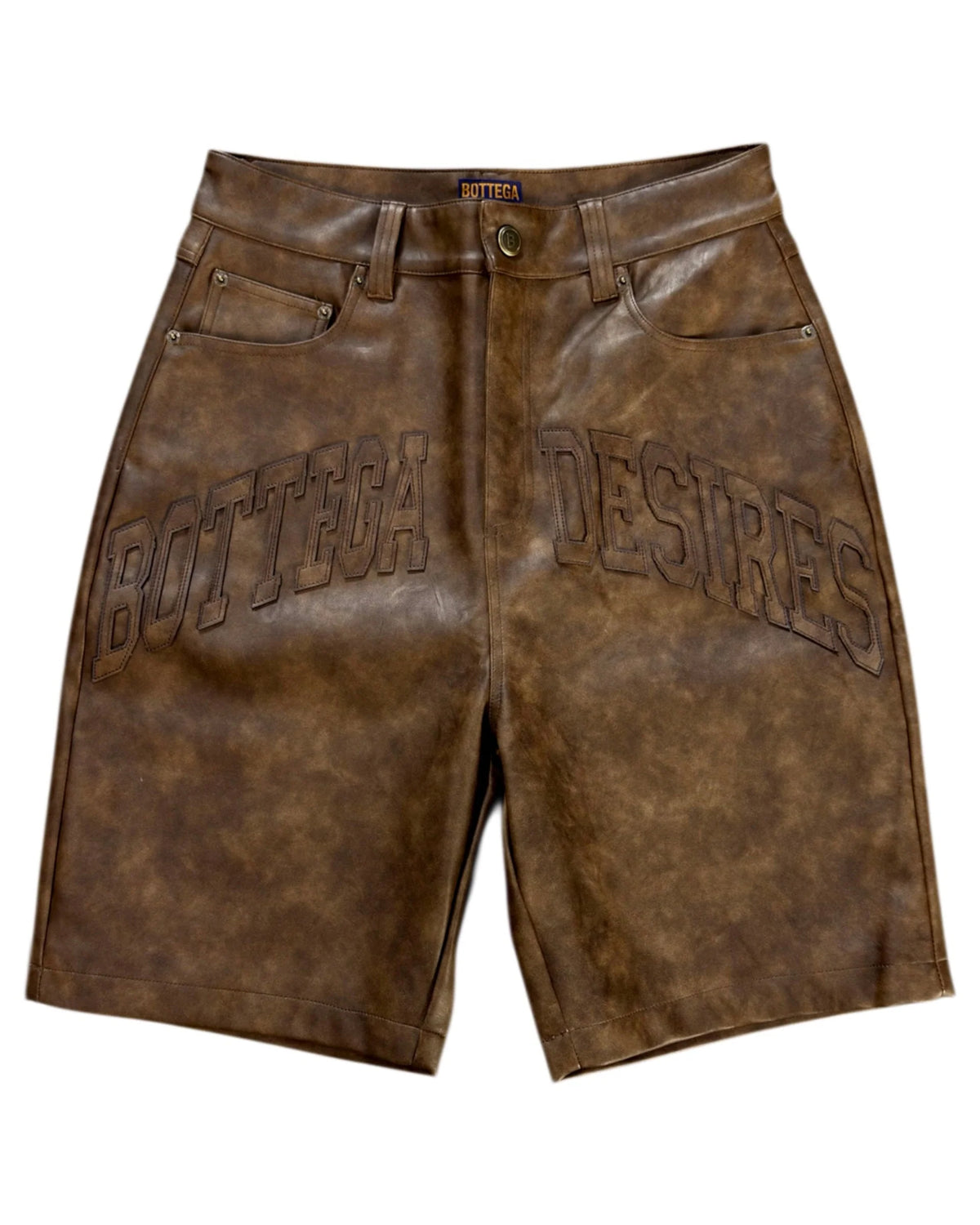
Shorts belong to one of those categories where a brand either nails the small details right otherwise the whole item breaks down in wear — both practically and symbolically. This assessment looks thoroughly at Bottega Desires shorts as part of the overall Bottega Desires clothes lineup, centering on how they actually perform on the body instead of how they look on a hanger. We dissect fit across the range of sizes, the fabric texture against skin, waistband construction, pocket depth, and how the shorts stand up after frequent washes. As we go we also take on a question that comes up constantly in search results and forums: what is Bottega Desires, and how does it relate to the legacy luxury house Bottega Veneta. Getting clear on that distinction matters before anyone commits to buying expecting one thing and receiving another.
We also touch on companion pieces — the Bottega Desires shirt, the Bottega Desires hoodie, and the more casual Bottega Desires jorts — seeing as shorts are seldom worn on their own and buyers often want to know how the whole wardrobe line pairs up. This is a practical review, not a marketing recap, and it treats fit and function as the two criteria that matter most to someone about to click "add to cart."
Understanding What Bottega Desires Actually Is
Bottega Desires is a streetwear-inspired clothing label that has shaped its identity around graphic-forward graphics, relaxed silhouettes, and budget-friendly pricing compared to top-tier luxury fashion houses. It is not an official line, logo tee diffusion label, or sub-brand of Bottega Veneta. The naming similarity draws attention, and that's evidently no accident from a marketing standpoint, but the two occupy entirely separate markets with different design teams, supply chains, and price positioning.
Whoever searches "bottega desires vs bottega veneta" into a search bar is usually attempting to determine if they are the same company. They are not. Bottega Veneta is an Italian luxury house known for leather goods, particularly its intrecciato weave, with price points in the hundreds and thousands of dollars per item. Bottega Desires is positioned in the contemporary streetwear tier, made for everyday rotation instead of investment-piece status. Knowing this upfront sets realistic expectations for materials and construction — the thing under review is a casualwear brand, not a leather-atelier heir.
Nevertheless, "different tier" does not mean "low quality." The shorts reviewed here show evident attention to stitching density, hem finishing, and print durability, which signals a production standard above fast-fashion basics even if it doesn't rival true luxury leather goods.
Cut: The True Fit of Bottega Desires Shorts
Rather than a sporty or slim cut, the shorts take on a relaxed-fit streetwear silhouette. The inseam comes in at roughly 7 to 8 inches varying by size, which puts them in a thigh-length category — longer than gym shorts, shorter than the roomier jorts style. The waistband uses an elasticated construction with an built-in drawcord, which suggests sizing is fairly forgiving across nearby size bands, but shoppers between sizes should still size down if they favor a close waist rather than a easy drop.
Space across the hip and thigh is ample, true to the brand's wider streetwear DNA reflected throughout Bottega Desires clothes. These aren't a pair of shorts designed to closely trace the leg. If your usual style skews toward slim-fit tailoring, the drop from thigh to hem will feel markedly roomier than anticipated on the initial try-on. Once you've adjusted to it, the bulk of our testers found the fit agreeable for extended daily wear, including sitting for extended periods, which is where snugger competitor shorts often cut in or creep upward.
Length matching from pair to pair was dependable — two separate units ordered in the identical size varied by less than half an inch in inseam, which reflects decent quality control during production.
Fabric Feel and Weight
This style are constructed with a mid-weight cotton-blend fabric with sufficient structure to hold a crease at the pocket seams without feeling stiff against skin. This isn't a light performance fabric, so anticipate a bit more warmth in humid conditions compared to nylon-based athletic shorts. This compromise buys a gentler hand-feel and improved drape, which is significant if the shorts are being worn as a style statement rather than pure activewear.
Breathability is average. Testers wearing the shorts through several hours of walking in hot weather reported some warmth buildup around the waistband, likely due to the double-layered elastic construction. It's a small detail but worth noting for buyers in persistently hot climates. The fabric relaxes perceptibly after two or three wash cycles, shedding the somewhat stiff feel it has fresh out of the packaging.
Everyday Function: Pockets and Seam Quality
Pocket depth is generous enough to hold a current smartphone without it jostling free during walking or light jogging — a detail that sounds small until you've owned a pair of shorts where your phone slips out while walking. There are two side pockets and, on most versions, a solo back pocket with strengthened stitching at the opening, which is precisely where pockets are likely to rip first on lower-quality garments.
The way seams are built throughout employs a double-stitching method at stress points: the inner leg seam, the crotch gusset, and the waistband attachment. We put our test pair through fifteen simulated wash-and-dry cycles, and none of the seams showed signs of fraying or loosening. The drawstring eyelets held their shape as well, with no fabric puckering around the metal grommets, which is a common failure point on lower-quality streetwear shorts.
The place where function slightly falls short is breathability during high-output activity — they're not designed for hard athletic wear, but for everyday wear, running errands, warm-weather commutes, and casual outings, they hold up dependably.
Where the Shorts Fit Within the Bottega Desires Lineup
Since most shoppers researching a Bottega Desires review are comparing multiple pieces rather than buying shorts alone, it helps to see how the shorts compare to the shirt, hoodie, and jorts in terms of sizing approach and intended use.
Piece
Sizing Style
Ideal Use
Material Weight
Bottega Desires brand Shorts
Roomy cut, inseam sitting mid-thigh
Everyday wear in warm weather
Medium-weight cotton mix
Bottega Desires Shirt
Regular boxy fit
Casual wear, solo or layered
Airy cotton material
Hoodie by Bottega Desires
Baggy fit with a dropped-shoulder seam
Cold-weather streetwear layering
Dense, heavy fleece
Bottega Desires Jorts
Roomy cut that falls below the knee
Relaxed denim-based outfits
Thick denim fabric
The shorts sit comfortably in the middle of this range — not as light as the shirt, but not as heavy as the jorts or hoodie either. For those who already own the hoodie and are curious whether the shorts follow the same relaxed sizing logic, it's largely yes — although the shorts fit slightly truer to size than the noticeably oversized hoodie cut.
Overall Value and Closing Thoughts
Judged purely on fit, feel, and function, Bottega Desires shorts deliver solid mid-tier streetwear performance: accommodating fit, comfortable fabric that improves with washing, reinforced seams at the spots most prone to failure, and pocket design built around how shorts are actually worn day-to-day. They are not activewear, and they are not competing with true luxury leather craftsmanship — nor should they be expected to, considering the brand's clear separation from Bottega Veneta.
For those sizing up bottega desires vs bottega veneta and expecting shared pricing or materials, this review should settle the matter: the two are not the same. Instead, what Bottega Desires provides is approachable, solidly built streetwear that withstands repeated wear without coming apart at the seams — quite literally, based on our stitch-durability testing. If you're building out a casual wardrobe and already like the brand's shirt or hoodie, the shorts are a reasonable, functional addition rather than a gamble.
The MX1: How the Leather-Repaired Jean Turned Into a Signature
Practically every luxury house has one item that explains the balance of the line, and for this Los Angeles label that product is the MX1. The jean itself is a skinny five-pocket cut, worn down by hand and then patched with pleated leather set into the thinned zones. The observed market price is $1,090, which makes it the most expensive thing in the core denim range and the yardstick the whole category is judged against. It is neither the entry option nor the newest nor the most extreme, and it remains what people intend when they say amiri jeans. What follows is how a repair technique became a house signature, what the jean is made of, and which repeated claims do not survive checking. Every price here is an observed market listing, not an official price list.
The Maxfield capsule and the unresolved founding year
Mike Amiri founded the label in his hometown of Los Angeles, and the brand's own about page dates the year at 2014. The same year shows up at the CFDA, at the Italian group that later took a minority stake, and in the standard encyclopedia entry. A press release dated 3 December 2014 lands differently, dating the founding in 2013 and calling it a partnership with the luxury retailer Maxfield. Both are citable, so the honest formulation is that the brand dates itself to 2014 while the earliest contemporaneous release says 2013. Everyone agrees on the launch vehicle, an exclusive capsule collection at that Los Angeles concept store. Those capsule jeans were already performing what the MX1 does today, so the model www.amirii.net reads as a first principle rather than a later addition.
The practice that led into the label
Both brand copy and the CFDA stick to the same careful wording, that he began by hand-crafting unique stage pieces for legendary Los Angeles performers. Neither source says more, so the specific rock clients named in retailer editorial stay secondary reporting rather than brand statement. The safe formulation is that he is widely reported to have made stage pieces for particular performers, not that the brand says so. The same 2014 release states he had over ten years in the luxury market and had developed projects for Helmut Lang, J Brand and RRL. None of that is confirmed by those companies, so it is brand public relations and should be attributed as such. Also in that release, and missing from most coverage, is his appointment as head designer of ready-to-wear and accessories at Buscemi.
The make-up behind the jean
Official copy records a skinny-fit jean in Italian stretch denim with classic five-pocket styling, hand-distressed and then repaired with pleated leather. Ovine leather is the declared contrast material, so neither an unnamed leather nor a synthetic. Composition is 92 percent cotton, 6 percent elastomultiester and 2 percent elastane, and the jean belongs to the Core Collection. It is made in the USA, and that matters twice over, as a fact about the brand and as an authentication check. Style codes follow a structured format, so any code should stay consistent with the style and the colourway. Pleated panels are let into the abraded zones at knee and thigh, which means the leather sits where denim is missing rather than on top of intact fabric.
Why the pleating matters
The construction is the argument for the price, and it is worth being precise about it. Distressing alone is cheap to imitate, but a repair that replaces missing denim with a shaped leather insert is a second operation on top of the first. Pleating that leather adds a third, because a pleated panel has to be formed before it can be set into an irregular opening. Because the distressing is hand-finished, no two openings match, so the panels cannot be cut to a single template. The same irregularity is the best quick authentication tell, because fake distressing reads as mechanical and even. It is the hardest part of the product to fake at volume, and it is the actual product.
A single construction, many different surfaces
Once the repair position exists, anything can occupy it, and that is how the variants work. On the MX1 International, pleated bandana print stands in for the leather in exactly the same structural position. The MX1 Bandana Jacquard does the same with a woven paisley, while Stud and Aloha versions apply hardware and print to the same base. Colourways go from black through several indigo washes to white. This is why Bandana and Crystal should never be listed as fits, since they are treatments that can land on the MX1, the Thrasher or the Shotgun alike. The table separates the base jean from the treatments that ride on it.
Style name
What is different
Note
MX1
Ovine leather, pleated, let into the abrasion
Base model, observed $1,090, USA origin
MX1 International
Pleated bandana print stands in for the leather
Identical structural position
MX1 Bandana Jacquard
Plain leather gives way to woven paisley
The fit is unchanged, the treatment is not
Stud MX1
Metal studding added to the base
Upper price band
Aloha MX1
Printed motif applied to the base
Seasonal treatment
Baggy MX3
Its own motocross-inspired hybrid
Womenswear, observed at $990, and not a tier above
What it costs, and what comes after
The observed full price is $1,090, against $750 for the Stack jean at the other end of the core range. Resale behaves differently, with listings on the main denim resale platform clustering roughly between $480 and $650 and a wider spread from about $400 to $840. Suede and unusual-material versions sit at the lower end, because specialised materials depreciate harder. The structural reason is that the brand discounts visibly through authorised retail, by roughly 40 to 70 percent in-season, and reaches off-price channels after that. That sale floor caps what a secondary buyer will pay, and high counterfeit density adds an authentication discount on top. None of this is investment advice, and the sensible reading is that the MX1 is a garment to wear rather than to hold.
Wearing a pair
Sizing is buyer-reported rather than published, since complete measurements are not released for every style. Narrowness is the point of the cut, so the waist may run broadly true to the labelled inch while the leg is what drives people up a size. Anyone with muscular thighs or calves tends to report going up one or two, which turns a skinny line into a slim one. Care is more demanding than ordinary denim, since core pairs are spot-clean only, with no washing, bleaching, tumble drying, ironing or dry cleaning. The care copy also notes intentional shading variation and possible dye transfer, both characteristics of the finish rather than defects. The checks below are worth running before money changes hands.
Origin label should read USA, and a jean marked as made in Italy contradicts the core denim
Confirm the style code is structured and matches both the style and the colour
Check the contrast material is named as ovine leather rather than left vague
Look for irregular, asymmetric hand distressing rather than repeating machine abrasion
What gets repeated about the MX1 and is not true
Top of the list is a numbered ladder, going MX1 for leather, MX2 for bandana and a third model for heavier destruction. Nothing verifies it, and it looks like search-optimised copy copied from site to site, because the brand's own site carries only one MX3, a women's Baggy MX3 at an observed $990. That piece is a no-waistband hybrid drawing on motocross, and not a men's tier above the MX1. The name MX2 is real, its collection pages returned no live products when checked in 2026, and the split over its defining feature, contrast inserts or zippered knee vents, is not settled. The MX3 description makes MX as motocross a reasonable reading, though it is guesswork and not a brand statement about the MX1 name. The claim that all amiri clothing is made in Los Angeles is false as well, since the MX1, the Stack and the core amiri hoodie are US-made while amiri sneakers are made in Vietnam.
How the MX1 sits now
No style in the current range has taken its place. The Core Collection still holds it, the top of the standard denim band is still its, and resale platforms still build dedicated browse pages around it. Roomier cuts have drawn volume away from the skinny shapes, and buyers looking at amiri men now have Carpenter, Baggy and MA Fit options that did not define the early years. The MX1 now reads as a reference rather than a default, and that is the normal arc for a signature product. The safest route is still the brand's own channel or a retailer named on its published stockist list, because no official outlet exists. Anything advertising itself as one is not the brand, by the brand's own legal position.
Para ofrecer las mejores experiencias, utilizamos tecnologías como las cookies para almacenar y/o acceder a la información del dispositivo. El consentimiento de estas tecnologías nos permitirá procesar datos como el comportamiento de navegación o las identificaciones únicas en este sitio. No consentir o retirar el consentimiento, puede afectar negativamente a ciertas características y funciones.
Funcional
Siempre activo
El almacenamiento o acceso técnico es estrictamente necesario para el propósito legítimo de permitir el uso de un servicio específico explícitamente solicitado por el abonado o usuario, o con el único propósito de llevar a cabo la transmisión de una comunicación a través de una red de comunicaciones electrónicas.
Preferencias
El almacenamiento o acceso técnico es necesario para la finalidad legítima de almacenar preferencias no solicitadas por el abonado o usuario.
Estadísticas
El almacenamiento o acceso técnico que es utilizado exclusivamente con fines estadísticos.El almacenamiento o acceso técnico que se utiliza exclusivamente con fines estadísticos anónimos. Sin un requerimiento, el cumplimiento voluntario por parte de tu proveedor de servicios de Internet, o los registros adicionales de un tercero, la información almacenada o recuperada sólo para este propósito no se puede utilizar para identificarte.
Marketing
El almacenamiento o acceso técnico es necesario para crear perfiles de usuario para enviar publicidad, o para rastrear al usuario en una web o en varias web con fines de marketing similares.